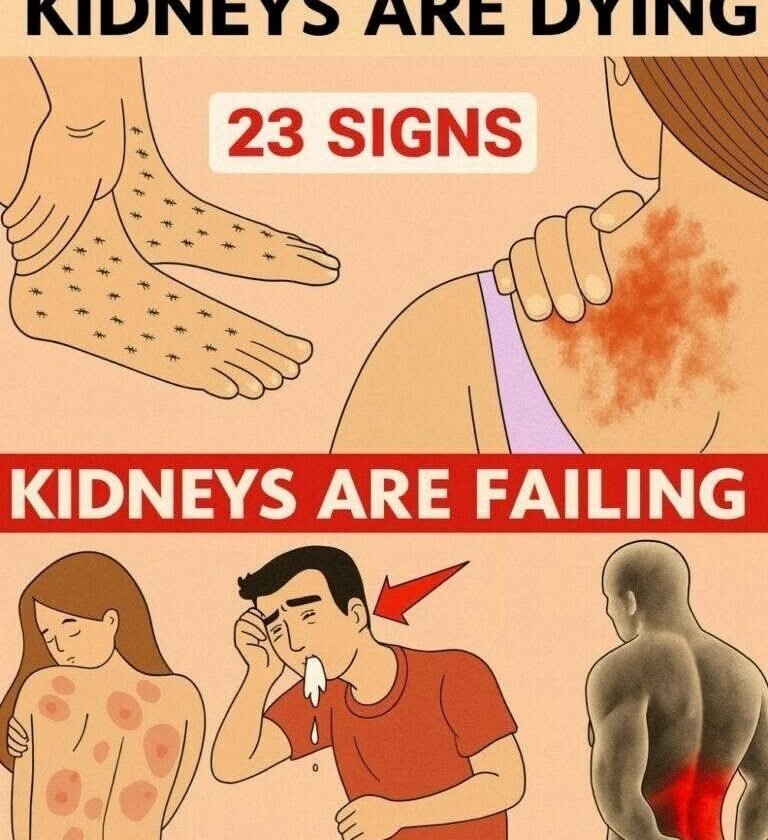
Because the kidneys filter waste, balance electrolytes, regulate blood pressure, and manage red blood cell production, when they begin to struggle, it can manifest in surprisingly subtle or “strange” ways throughout the body—often long before overt pain sets in.
Here are 23 unusual or overlooked signs that your kidneys might be crying out for attention, grouped by how they affect different parts of the body.
Urinary & Fluid Changes
-
Foamy or Bubbly Urine: If your urine looks like it has been beaten like eggs (resembling scrambled egg froth), it often indicates protein leaking into the urine (proteinuria) due to damaged kidney filters.
-
Blood in the Urine: Healthy kidneys typically keep blood cells inside the body when filtering waste, but damaged filters can allow red blood cells to leak out.
-
Waking Up to Pee Frequently at Night (Nocturia): Needing to get up multiple times during the night can signal that the kidney’s concentrating ability is compromised.
-
Changes in Urination Volume: You might suddenly experience a drop in output or, conversely, find yourself needing to go much more often with pale urine.
-
Difficulty or Painful Urination: A feeling of pressure, burning, or difficulty starting a stream can point to blockages, infections, or kidney stress.
Swelling & Fluid Retention (Edema)
-
Puffiness Around the Eyes (Periorbital Edema): Waking up with swollen, heavy eyelids can happen when failing kidneys leak a large amount of protein into the urine rather than keeping it in the blood.
-
Swollen Ankles and Feet: When kidneys cannot efficiently remove extra sodium and fluid, water pools in the lower extremities due to gravity.
-
Hand and Finger Swelling: Rings suddenly feeling too tight can be an indicator of acute fluid retention.
-
Abdominal Bloating: Unexplained fluid buildup can sometimes accumulate in the peritoneal cavity, causing a tight, heavy feeling in the belly.
Skin & Surface Changes
-
Severe, Persistent Itchiness (Pruritus): When kidneys fail to remove toxins from the bloodstream, the buildup of waste products (and imbalances in phosphorus and calcium) can cause deep, maddening skin itchiness.
-
“Half-and-Half” Nails: Fingernails where the bottom half is white and the top half is reddish-brown can occasionally be seen in chronic kidney disease.
-
Ashen or Pale Skin: A buildup of waste toxins (uremia) or anemia from lack of the kidney hormone erythropoietin can give the skin a dull, yellowish, or pale tone.
-
Unexplained Bruising or Easy Bleeding: Kidney dysfunction can sometimes affect platelet function, making you bruise more easily than usual.
Energy, Brain, & Nerve Signs
-
Brain Fog and Trouble Concentrating: A buildup of toxins in the blood can affect cognitive function, leading to sluggish thinking or memory lapses.
-
Metallic Taste in the Mouth or Ammonia Breath: Uremia can change how food tastes (often making meat unappealing) and cause bad breath that smells faintly of urine or ammonia.
-
Restless Legs Syndrome (RLS): An uncontrollable urge to move your legs—especially at night—is disproportionately common in people with declining kidney function.
-
Muscle Cramps: Severe electrolyte imbalances, particularly low calcium or poorly managed phosphorus and magnesium, frequently trigger painful nighttime muscle cramps (especially in the calves).
-
Extreme, Unrelenting Fatigue: Healthy kidneys make a hormone called EPO, which tells your body to make red blood cells. When kidneys fail, anemia sets in, causing profound exhaustion.
Systemic & Other Subtle Red Flags
-
Persistent Metallic or Altered Taste Buds: Food tasting “off” or like loose change can cause a sudden, unexplained loss of appetite or aversion to eating.
-
Unexplained Nausea and Vomiting: High levels of accumulated waste toxins in the body can irritate the digestive tract, causing frequent morning nausea.
-
Shortness of Breath: This can happen for two reasons: fluid backing up into the lungs, or low red blood cell counts (anemia) starving the body of oxygen.
-
Feeling Constantly Cold: Anemia caused by kidney trouble can make it difficult to regulate your body temperature, leaving you shivering in a room where others feel comfortable.
-
High Blood Pressure Out of Nowhere: The kidneys play a massive role in regulating blood pressure. If they are narrowed or damaged, they can release hormones that spike your blood pressure, creating a vicious cycle of further kidney damage.
⚠️ When to Consult a Doctor
While many of these symptoms can overlap with other common conditions (like dehydration, poor sleep, or allergies), persistent or multiple symptoms together warrant a simple blood test (to check creatinine and eGFR) and a urine test to evaluate how well your kidneys are filtering.
Are you or someone you know noticing any specific changes that prompted you to look into kidney health?