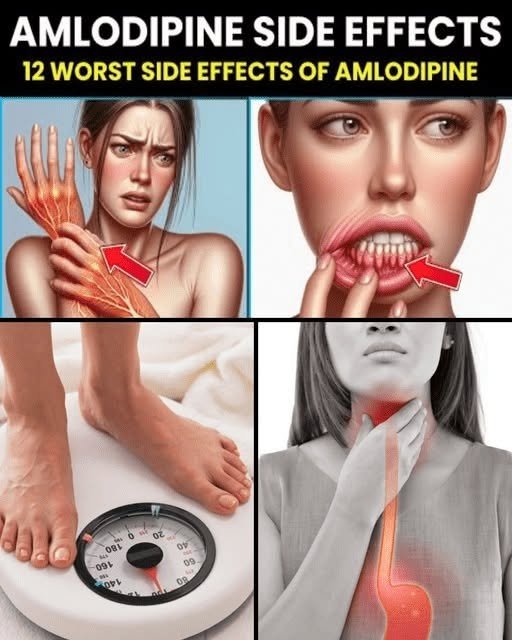
That headline uses classic clickbait formatting to turn a standard medical warning list into a high-stakes thriller!
Amlodipine is a very common, effective calcium channel blocker prescribed to lower blood pressure and manage chest pain (angina). While it is generally well-tolerated, it does have known side effects that are important to watch for—though grouping them all as things you must “NEVER ignore” exaggerates normal, mild adjustments into medical emergencies.
Here is a realistic breakdown of the key side effects of amlodipine, what is normal, and which ones actually require medical attention.
The Common (and Usually Mild) Side Effects
Many people experience mild side effects as their blood vessels relax and their blood pressure drops. These are generally not dangerous, though they can be annoying:
-
Peripheral Edema (Swelling in the Ankles and Feet): This is the single most common side effect of amlodipine. Because the medication widens blood vessels (especially the arterioles) more than the veins, fluid can leak into surrounding tissues due to local pressure changes. It is usually worse at the end of the day.
-
Flushing or a Warm Sensation: The sudden widening of blood vessels can cause a warm, flushed feeling, particularly in the face and neck.
-
Mild Dizziness or Lightheadedness: Similar to other blood pressure medications, your body may take a moment to adjust when standing up quickly.
-
Fatigue: A slight drop in systemic blood pressure can sometimes leave you feeling a bit more tired than usual during the first few weeks.
Side Effects You Should Discuss With Your Doctor
If these symptoms occur or persist, you should bring them up at your next appointment so your doctor can evaluate your dosage:
-
Worsening Angina (Chest Pain): Paradoxically, when first starting amlodipine or increasing the dose, some people experience a temporary increase in chest pain.
-
Heart Palpitations: A feeling of a rapid or pounding heartbeat as the body reflexively compensates for lower blood pressure.
-
Ginkgo/Gum Changes: Over long-term use, some individuals experience gum overgrowth (gingival hyperplasia), which requires good dental hygiene and regular dental checkups.
Symptoms You Should NOT Ignore (When to Seek Medical Care)
While everyday swelling or mild flushing doesn’t require an emergency room visit, certain rare or severe reactions do require prompt medical evaluation:
-
Severe Swelling or Shortness of Breath: If swelling in your legs spreads rapidly, or if you develop sudden shortness of breath or difficulty breathing, it could indicate worsening heart function or fluid overload.
-
Fainting or Extreme Dizziness: If your blood pressure drops too low, causing you to black out or feel extremely faint.
-
Signs of an Allergic Reaction: Hives, swelling of the face, lips, or tongue, or sudden difficulty breathing.
Crucial Safety Note
Never stop taking amlodipine abruptly without speaking to your doctor. Stopping blood pressure medication suddenly can cause a sharp rebound in blood pressure, increasing your risk of stroke or heart complications.
Are you or a loved one currently taking amlodipine and noticing side effects like ankle swelling, or were you just curious about the medication?