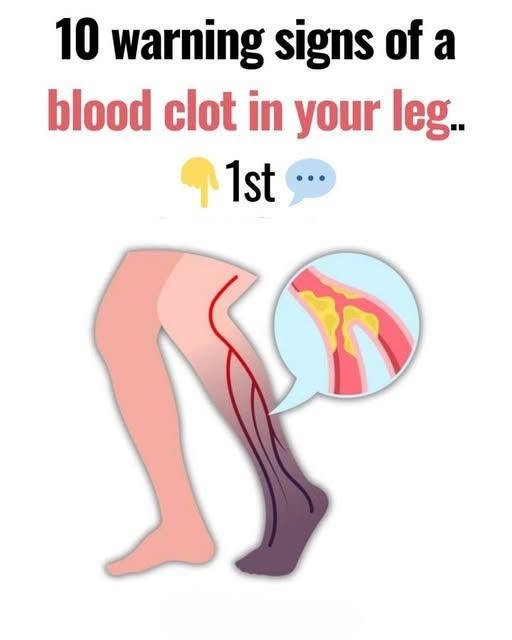
🩸 10 Warning Signs of a Blood Clot in the Leg You Should Know
A blood clot in a deep vein of the leg is called deep vein thrombosis (DVT). It can become dangerous if part of the clot breaks away and travels to the lungs, causing a pulmonary embolism (PE).
Importantly, DVT can sometimes occur with few or no symptoms, so symptoms alone cannot confirm or rule it out.
1. One-sided leg swelling
A leg or calf that suddenly becomes noticeably more swollen than the other can be a warning sign.
2. Calf or leg pain
DVT pain may feel like an ache, cramp, tenderness, or soreness, often occurring in the calf.
3. Unexplained tenderness
The leg may be tender when touched, particularly around the affected area.
4. Warmth
The skin over the affected area may feel warmer than the surrounding skin.
5. Red or discolored skin
The affected leg can develop redness or another unusual change in skin color.
6. A feeling of heaviness
Some people describe the affected limb as unusually heavy or uncomfortable.
7. Tight or stretched skin
Swelling can make the skin feel tight or stretched.
8. Pain that becomes worse with walking or standing
Leg discomfort associated with DVT may become more noticeable when you’re upright or moving, although this isn’t specific to a clot.
9. Swelling that appears without an obvious injury
If one leg suddenly swells and you haven’t injured it, don’t simply assume it’s a pulled muscle.
10. Symptoms without much visible warning
This is an important one: some DVTs produce no obvious symptoms at all. That’s why people with significant risk factors should take unexplained symptoms seriously.
🚨 The symptoms you should NEVER ignore
A clot in the leg can travel to the lungs. Call your local emergency number immediately if you have possible DVT symptoms along with:
- Sudden shortness of breath
- Chest pain, especially pain that worsens with breathing
- Coughing up blood
- Rapid heartbeat
- Severe lightheadedness or fainting
These can be signs of a pulmonary embolism, which requires emergency treatment.
Who is at higher risk?
Risk increases with situations such as recent major surgery or hospitalization, prolonged immobility or long-distance travel, pregnancy/postpartum periods, previous DVT or PE, certain cancers, estrogen-containing medications, and some inherited clotting disorders.
One crucial point
A swollen or painful leg doesn’t necessarily mean you have a blood clot. Muscle injury, infection, inflammation, and other conditions can cause similar symptoms. The only way to determine whether a DVT is present is through appropriate medical evaluation, which may include an ultrasound and blood testing.
Don’t massage a leg that you suspect may have a blood clot or try to treat it yourself. Get medical advice promptly.