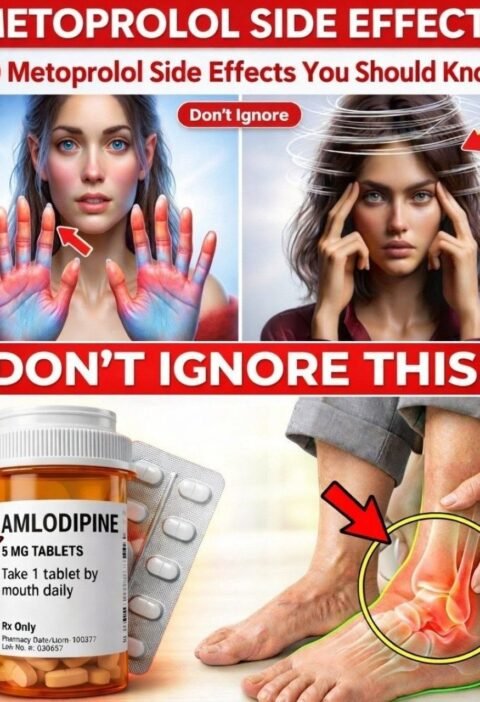
10 Important Side Effects of Metoprolol You Should Know
Metoprolol is a beta-blocker commonly used for high blood pressure, angina, heart failure, and certain heart-rhythm problems. Like any medicine, it can cause side effects, although many people tolerate it well.
M
MedlinePlus
+1
Common or potentially troublesome effects
Tiredness or fatigue — especially when starting treatment.
Dizziness or lightheadedness — blood pressure and heart rate can fall.
Slow heartbeat (bradycardia) — metoprolol intentionally slows the heart.
Low blood pressure — you may feel weak, dizzy, or faint.
Shortness of breath — particularly important if it’s new or worsening.
Diarrhea or stomach upset.
Depressed mood or unusual tiredness — mood changes have been reported.
Cold hands or feet — reduced circulation to the extremities can occur.
Swelling or unexpected weight gain — particularly important in someone taking metoprolol for heart failure.
Sleep or sexual problems — some people report sleep disturbances or sexual difficulties while taking beta-blockers.
The FDA prescribing information and MedlinePlus specifically identify tiredness, dizziness, depression, shortness of breath, slow heart rate, low blood pressure, diarrhea, itching/rash, and swelling among reported adverse effects.
M
MedlinePlus
+1
⚠️ Two important warnings
Don’t stop metoprolol suddenly. Abrupt withdrawal can worsen heart problems and may increase the risk of angina or other serious cardiac complications. Any dose reduction should be done under medical supervision.
M
MedlinePlus
+1
Metoprolol can also mask some warning symptoms of low blood sugar, particularly a rapid heartbeat. People with diabetes should be aware of this.
M
MedlinePlus
🚨 Get medical help promptly
Seek urgent medical attention for fainting, severe difficulty breathing, significant swelling, rapid or irregular heartbeat, or symptoms suggesting a serious allergic reaction.
M
MedlinePlus
Bottom line: Metoprolol can be an important and effective heart medication, and side effects don’t necessarily mean you should stop taking it. If you’re experiencing troublesome symptoms, contact your doctor or pharmacist rather than changing the dose yourself.
M
Sources