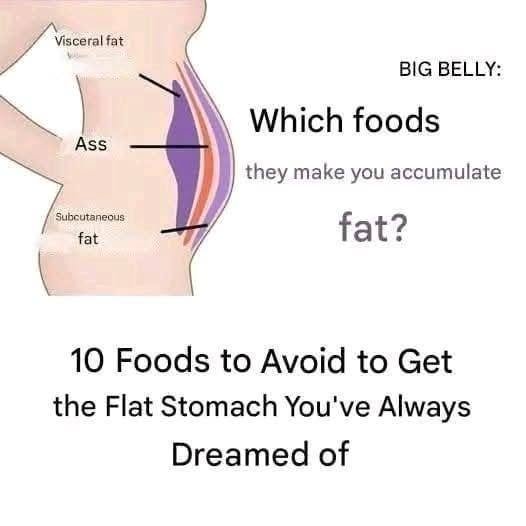
If your goal is a flatter stomach, there isn’t a magic list of foods you must completely eliminate. A flatter abdomen usually comes from reducing excess body fat and, for some people, reducing bloating and constipation.
10 foods to limit if they make you bloated
- Sugary soft drinks — carbonation can increase bloating, while the added sugar adds calories.
- Sweetened juices and energy drinks — easy to consume in large amounts without feeling full.
- Highly processed snacks — chips, cookies, and similar foods can be calorie-dense and high in sodium.
- Fast food and fried foods — often high in calories and fat and can contribute to weight gain.
- Processed meats — foods such as sausages and some deli meats can be high in sodium and saturated fat.
- Large amounts of sweets and desserts — excess calories can make losing abdominal fat harder.
- Very salty foods — high sodium intake can temporarily increase water retention and make your abdomen feel puffier.
- Large portions of refined carbohydrates — such as white bread and pastries, particularly when they replace higher-fiber foods.
- Foods that personally trigger gas — beans, onions, certain dairy products, or other foods can cause bloating in susceptible people.
- Large late-night meals — eating a very large amount at once can leave you feeling distended and uncomfortable.
What to eat instead
Build meals around vegetables, fruit, beans or lentils, whole grains, lean protein, nuts/seeds, and unsaturated fats, while keeping portions appropriate for your goals. Drink water regularly and stay physically active.
And remember: you cannot selectively burn belly fat by avoiding one particular food. If you’re already at a healthy weight, some abdominal roundness is completely normal.
If your abdomen is persistently swollen, painful, rapidly enlarging, or associated with unexplained weight loss, vomiting, or blood in the stool, that’s different from ordinary bloating and should be medically evaluated.