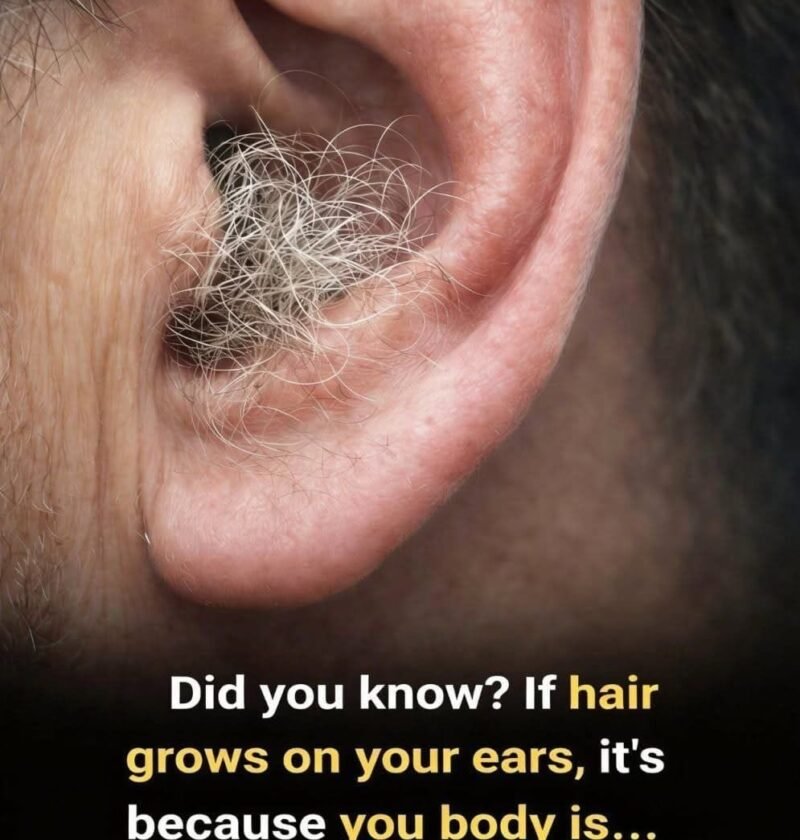
While it might seem like an old wives’ tale, noticing changes in your body—such as an increase in ear hair—actually can offer minor clues about your biology, aging, and internal health.
The medical term for heavy outer ear hair growth is auricular hypertrichosis. What it says about your health generally boils down to a few key biological factors:
1. Normal Aging and Hormone Sensitivity
-
What it means: For the vast majority of people (predominantly men), sprouting thicker or longer hairs on and inside the ears is a standard part of getting older.
-
The science: As men age, their hair follicles—particularly terminal hair follicles in areas like the ears, nose, and eyebrows—can become increasingly sensitive to normal circulating levels of androgens (like testosterone). Even if overall hormone levels shift or drop with age, the localized sensitivity of these follicles increases, turning fine “peach fuzz” (vellus hair) into coarse terminal hair.
2. Genetic Predisposition
-
What it means: Your family tree plays the biggest role in whether you will grow noticeable ear hair.
-
The science: While older folklore heavily suggested that “hairy ears” were strictly tied to a specific Y-chromosome genetic trait passed down generationally, modern medical understanding views it as a multi-factorial genetic trait. If your father or grandfathers developed prominent ear hair, you are statistically much more likely to develop it as well.
3. A Natural Biological Defense Mechanism
-
What it means: From an evolutionary standpoint, the presence of hair in and around your ear canal isn’t a sign of disease—it’s a functional tool.
-
The science: Tragi hairs (the terminal hairs growing near the tragus) work hand-in-hand with your body’s natural earwax. Together, they form a physical barrier that prevents dust, small debris, insects, and foreign particles from traveling deep into the ear canal and damaging the eardrum.
A Common Point of Confusion: Ear Hair vs. “Frank’s Sign”
People discussing ear hair often mix it up with Frank’s Sign—a completely different physical ear feature. Frank’s sign is a deep, diagonal crease running across the fleshy part of the earlobe. Unlike ear hair (which is mostly a harmless byproduct of aging and genetics), medical studies have occasionally associated Frank’s diagonal earlobe crease with a slightly higher statistical risk of coronary artery disease.
The Takeaway
In most cases, developing ear hair is entirely benign. It does not mean you have an underlying illness; it is simply a visible marker of time, hormones, and DNA. If you choose to manage it for comfort or aesthetic reasons, safe trimming or professional grooming is recommended, as harsh DIY methods can cause local irritation or skin infections.
Are you noticing any other sudden changes in hair growth patterns or physical features lately?