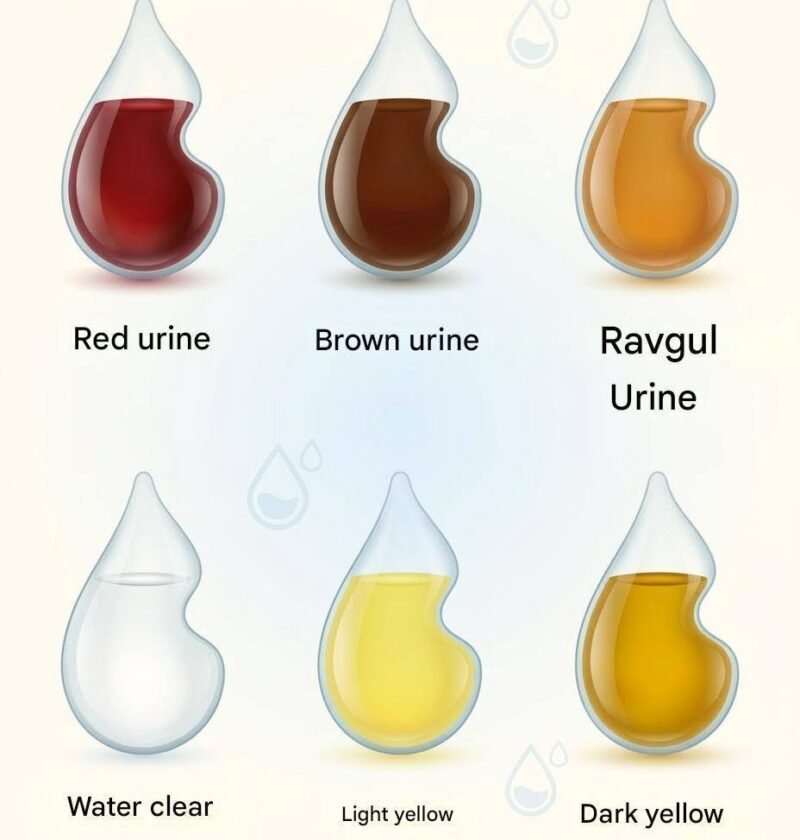
What Does the Color of Your Urine Say About Your Health? 🚽
Urine color can provide some clues about hydration and health, but color alone cannot diagnose a disease. Certain foods, vitamins, medicines, and infections can change its appearance.
🌈 Common urine colors
-
Pale yellow: Usually a sign of good hydration.
-
Dark yellow/amber: Often means you’re dehydrated and may need more fluids.
-
Clear: You may be drinking more water than you need. Constantly clear urine isn’t necessarily better.
-
Orange: Can result from dehydration or certain medications. Persistent orange urine should be evaluated.
-
Pink or red: May come from beets or certain medicines, but can also indicate blood in the urine and shouldn’t be ignored.
-
Brown or cola-colored: Can occur with severe dehydration, some medications, liver problems, or muscle breakdown and warrants medical attention if unexplained.
-
Blue or green: Uncommon and can result from certain medications, dyes, or occasionally infections.
-
Cloudy or milky: May be associated with urinary infection, crystals, or other substances in the urine.
⚠️ When to get checked
Contact a healthcare professional if your urine is persistently red, brown, very cloudy, unusually foul-smelling, or otherwise changed without an obvious explanation, particularly if you also have pain, fever, burning during urination, or increased frequency.
One unusual urine color isn’t necessarily a health emergency. What matters is whether the change persists and whether other symptoms occur.