1. Everyday Wear, Moisture & Chemical Exposure (Most Common)
-
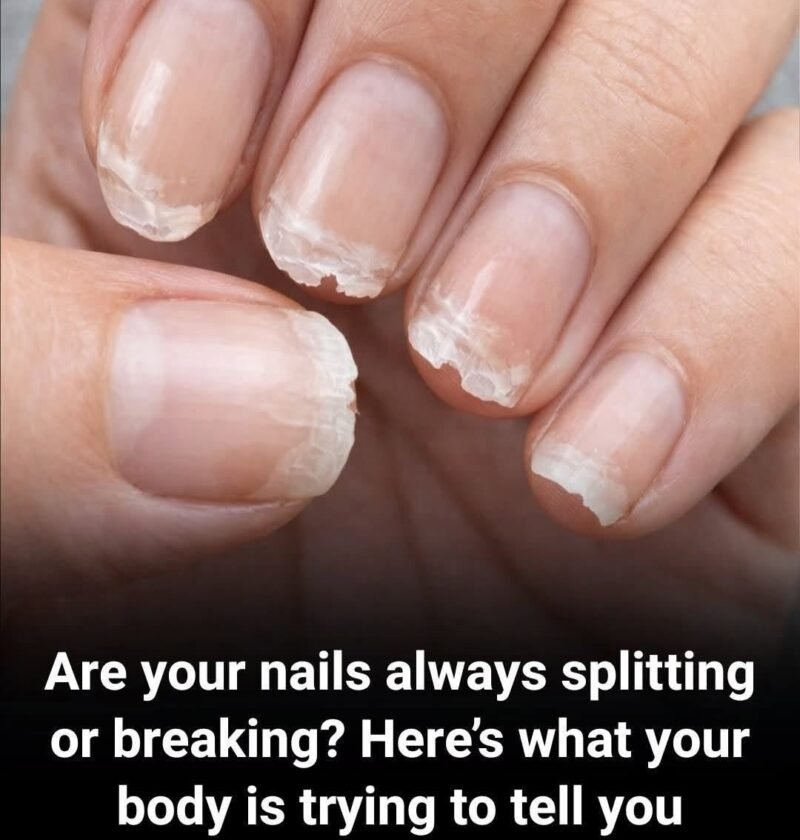
Frequent water or detergent contact: Washing dishes, cleaning, laundry, or frequent handwashing without gloves strips protective oils.
-
Nail enhancements and solvents: Frequent acetone removers, harsh nail hardeners, aggressive filing, or peeling off gel or acrylic polish can thin and weaken the surface.
-
Using nails as tools: Prying lids, scraping labels, or biting/picking nails and cuticles creates micro-splits that spread easily.
2. Aging, Hormonal Shifts & Circulation
-
Natural aging and menopause: As we get older, nail growth slows and nails naturally hold less moisture, often leading to dryness, vertical ridges, and easier breakage. Hormonal shifts—such as during pregnancy or after menopause—can also change nail strength and hydration.
-
Reduced fingertip blood flow: Cold weather, smoking, or conditions that narrow small blood vessels (such as Raynaud’s phenomenon) can reduce nutrients reaching the nail matrix and leave nails slow-growing or fragile.
3. Nutritional & Internal Health Factors
-
Low iron or iron-deficiency anemia: Can contribute to brittle nails—or, in more pronounced cases, spoon-shaped nails—often accompanied by fatigue, pale skin, or shortness of breath.
-
Thyroid imbalances: Both underactive (hypothyroidism) and overactive thyroid function can affect nail growth and texture, typically alongside broader clues like fatigue, weight changes, or temperature sensitivity.
-
Nutritional gaps: Inadequate overall protein or low zinc/vitamin status can play a role in some people, though taking extra supplements (such as high-dose biotin) when your levels are already normal does not reliably make healthy nails stronger—and high-dose biotin can interfere with certain lab tests.
4. Local Nail or Skin Conditions
-
Fungal nail infection (onychomycosis): More common on toenails, often causing thickening, discoloration, or crumbling.
-
Nail psoriasis or eczema: Can cause tiny dents (“pitting”), ridging, lifting, or changes in the skin around the nails.
-
Certain medications: A few prescription treatments can affect nail texture as a side effect.
Practical Care & When to Get Checked
-
Protect and moisturize: Wear gloves during dishwashing or cleaning, keep nails trimmed fairly short and filed smoothly in one direction, and apply plain hand cream or ointment to your nails and cuticles regularly.
-
Give nails a break: Pause harsh removers or gel/acrylic coatings if your nails feel thin or peeled after removal.