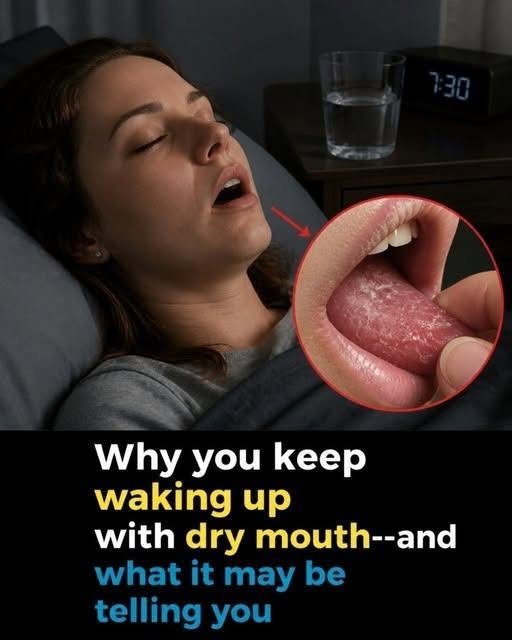
Waking up with a dry mouth is common and usually doesn’t mean something is seriously wrong. It often happens because saliva production decreases during sleep, especially if you breathe through your mouth.
What could be causing it?
-
Mouth breathing: A blocked nose, allergies, or sleeping with your mouth open can dry the mouth overnight.
-
Snoring or sleep apnea: Persistent dry mouth alongside loud snoring, gasping/choking during sleep, morning headaches, or significant daytime sleepiness deserves medical evaluation.
-
Dehydration: Not drinking enough fluids—or losing fluids through sweating, vomiting, or diarrhea—can contribute.
-
Medications: Many medicines, including some antihistamines, antidepressants, decongestants, and blood-pressure medications, can reduce saliva.
-
Alcohol or tobacco: These can worsen dryness.
-
Medical conditions: Diabetes and some disorders affecting the salivary glands can cause persistent dry mouth.
What you can try
Drink enough water throughout the day, address nasal congestion, avoid tobacco and excessive alcohol, and consider sugar-free gum or lozenges to stimulate saliva. Avoid stopping a prescribed medication without discussing it with your clinician.
If dry mouth persists for weeks, is severe, causes difficulty swallowing or speaking, or comes with excessive thirst/urination, recurrent mouth infections, or dental problems, it’s worth seeing a doctor or dentist.
And if you’re experiencing dry mouth plus loud snoring, choking/gasping during sleep, or marked daytime sleepiness, ask about sleep apnea rather than simply assuming you’re dehydrated.