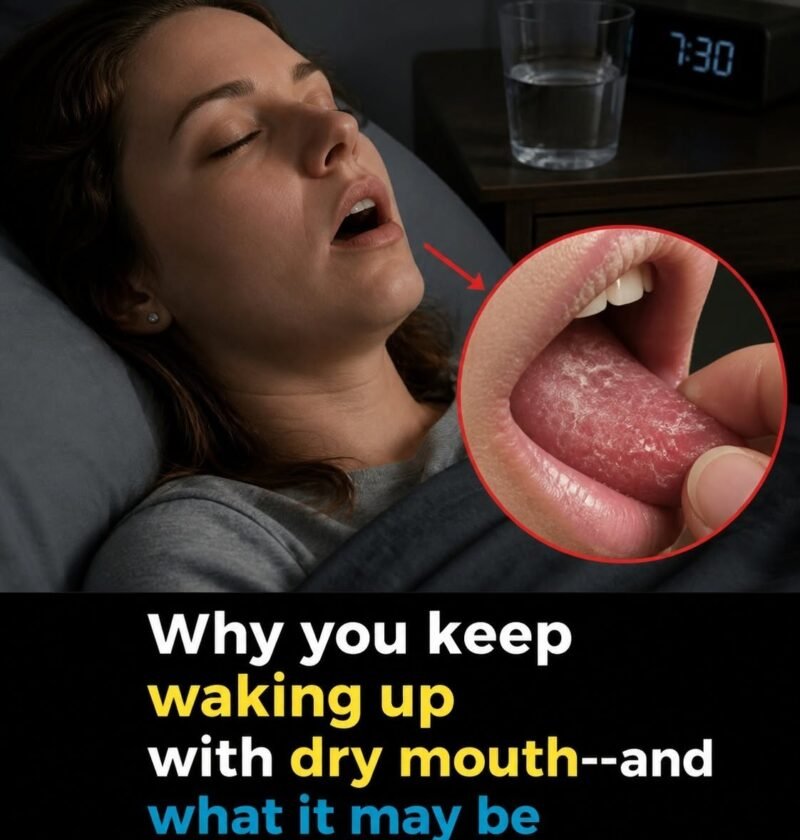
Waking Up With a Dry Mouth? Here’s What Your Body Might Be Telling You
Waking up with a dry, sticky mouth is common. Sometimes it’s simply from sleeping with your mouth open, but persistent morning dry mouth can have several possible causes.
1. Sleeping With Your Mouth Open
A blocked nose, allergies, or nasal congestion can cause you to breathe through your mouth while sleeping, drying out your mouth and throat.
2. Dehydration
Not drinking enough fluids during the day—or losing fluids through sweating, vomiting, or diarrhea—can contribute to a dry mouth.
3. Medications
Many commonly used medicines can cause dry mouth, including some medications for allergies, depression, blood pressure, and other conditions.
Don’t stop a prescribed medication on your own. Ask your doctor or pharmacist whether dry mouth could be a side effect.
4. Snoring or Sleep Apnea
Loud snoring and mouth breathing can leave you with a dry mouth in the morning. If you also experience gasping during sleep, morning headaches, or significant daytime sleepiness, discuss the possibility of sleep apnea with a healthcare professional.
5. Smoking or Tobacco Use
Smoking and other tobacco products can irritate the mouth and contribute to dryness.
6. High Blood Sugar
Persistent dry mouth can sometimes occur with diabetes, particularly when blood sugar is high and increased urination leads to fluid loss.
7. Anxiety or Stress
Stress can temporarily reduce saliva production, leaving your mouth feeling unusually dry.
What Can You Do?
💧 Stay adequately hydrated during the day.
👃 Treat nasal congestion when appropriate so you can breathe comfortably through your nose.
🚭 Avoid tobacco.
☕ Limit excessive caffeine if it makes your symptoms worse.
🦷 Maintain good oral hygiene and have regular dental checkups.
🍬 Sugar-free gum or lozenges can stimulate saliva production.
When Should You Get Checked?
See a healthcare professional or dentist if dry mouth is persistent, severe, or accompanied by difficulty swallowing, mouth sores, frequent thirst or urination, tooth decay, or other new symptoms.