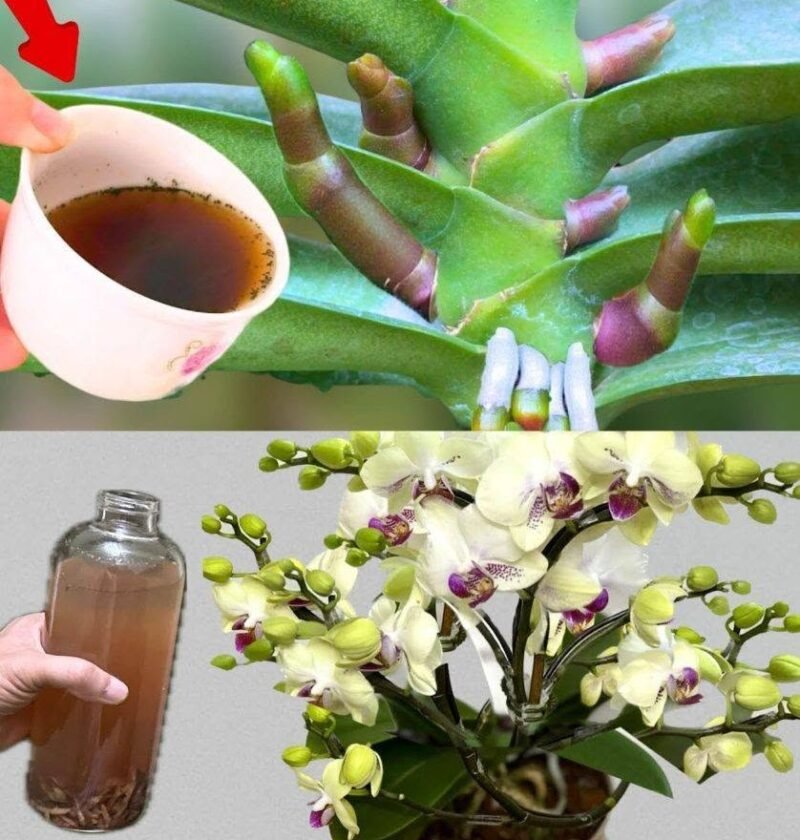
Why Kitchen Watering Hacks Backfire
-
Root rot & mold: Orchids grow in chunky bark, not soil. Organic liquids like rice starch, milk, or banana water coat the bark, feed bacteria and fungus, and attract fungus gnats—often suffocating and rotting the roots.
-
Locked nutrients: Orchids cannot absorb raw starches or sugars from kitchen scraps until microbes break them down, which doesn’t happen cleanly in a bark pot.
What Actually Makes a Leafy Orchid Bloom
-
Give it a temperature drop: Most common orchids (Phalaenopsis) need a 10°F–15°F (5°C–8°C) drop in nighttime temperature for 2–3 weeks in autumn or winter to trigger a flower spike. Keeping it in a consistently warm room keeps it stuck in “leaf-growing mode.”
-
Increase bright, indirect light: Deep, dark green leaves often mean the plant is getting slightly too little light to bloom. Move it closer to a bright window (without harsh midday sun that burns leaves) until the foliage turns a lighter, grassy olive-green.
-
Use diluted orchid fertilizer: Instead of kitchen scraps, water with a balanced or bloom-boosting liquid orchid fertilizer diluted to 1/4 or 1/2 strength every couple of weeks during active growth, flushing with plain water once a month to prevent salt buildup.