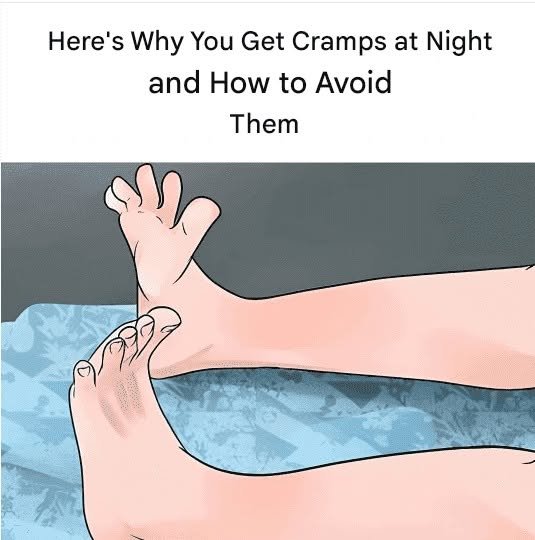
Why Do We Get Cramps at Night?
Nighttime leg cramps are very common, especially in the calves and feet. There isn’t one single cause, and the idea that they always mean dehydration or an electrolyte deficiency isn’t accurate.
Common contributors include:
-
Muscle fatigue or overuse — especially after unusual exercise or prolonged standing.
-
Long periods of inactivity — muscles that aren’t regularly exercised may be more prone to cramping.
-
Certain medications — some medicines can contribute to cramps.
-
Pregnancy and aging — both are associated with more frequent nighttime cramps.
-
Nerve or circulation problems — occasionally, an underlying condition can contribute.
-
Dehydration or electrolyte disturbances — these can play a role, particularly in certain circumstances, but aren’t responsible for every nighttime cramp.
What to do when a cramp strikes
Gently stretch the affected muscle and massage it. For a calf cramp, straighten your leg and gently pull your toes toward your face. Walking carefully for a few moments can also help.
Regular calf stretching and appropriate physical activity may reduce recurring cramps.
When to get checked
Speak with a healthcare professional if cramps are frequent, severe, getting worse, or repeatedly disturbing your sleep, especially if you also have weakness, numbness, persistent pain, or swelling.
Sudden swelling, warmth, redness, and pain in one leg, particularly with chest pain or shortness of breath, requires urgent medical attention.