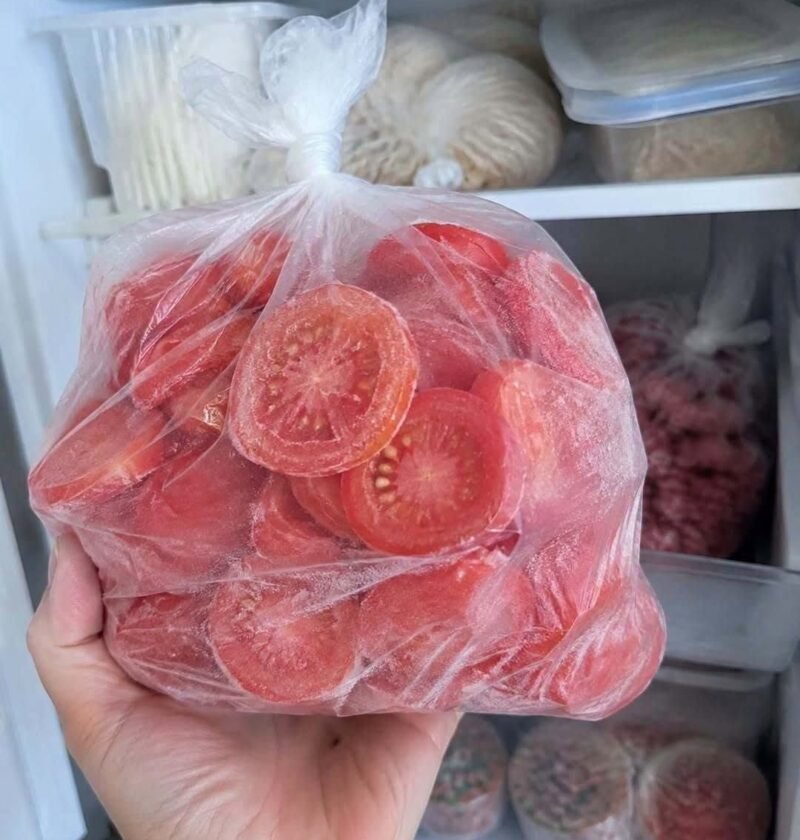
The Grain of Truth (The “Main Rule” Clickbait Refers To)
-
Freeze them whole, unpeeled, and completely dry (with cores removed): Ice crystals rupture tomato cell walls. Leaving the skin intact holds the tomato together in the freezer—and as soon as you run a frozen tomato under warm tap water for 10–15 seconds, the skin slips right off effortlessly without boiling or blanching first.
-
Never thaw them raw on the counter for salads: Thawing a frozen tomato turns it soft and watery because the ruptured cell walls release juice. Instead, drop frozen tomatoes straight into hot sauces, soups, stews, or chili while still frozen, or let them thaw in a bowl and save the flavorful liquid for cooking.
What Freezing Actually Preserves vs. Changes
-
What stays “fresh”: Bright acidity, natural sweetness, aroma, and nutrients (including lycopene, which actually becomes more bioavailable after freezing and cooking).
-
What changes permanently: Texture. Once frozen, a tomato is strictly a cooking tomato—great for marinara, shakshuka, curries, salsa, and roasted sauces, but mushy if sliced cold for burgers or caprese salads.
How to Freeze Tomatoes Properly (Step-by-Step)
-
Wash and dry completely: Rinse ripe, unblemished tomatoes and pat them bone-dry with a towel so surface water doesn’t form freezer-burn ice crystals.
-
Core the stem end: Use a paring knife to pop out the tough green stem core (optional, though it makes prep faster later).
-
Flash-freeze on a tray first: Place the whole tomatoes spaced apart on a parchment-lined baking sheet for 2 to 3 hours until solid—this prevents them from freezing into one giant, inseparable clump.
-
Pack airtight: Transfer the frozen tomatoes into a heavy-duty freezer bag, press out as much air as possible, label with the date, and store at -18°C (0°F) for up to 6 to 8 months.