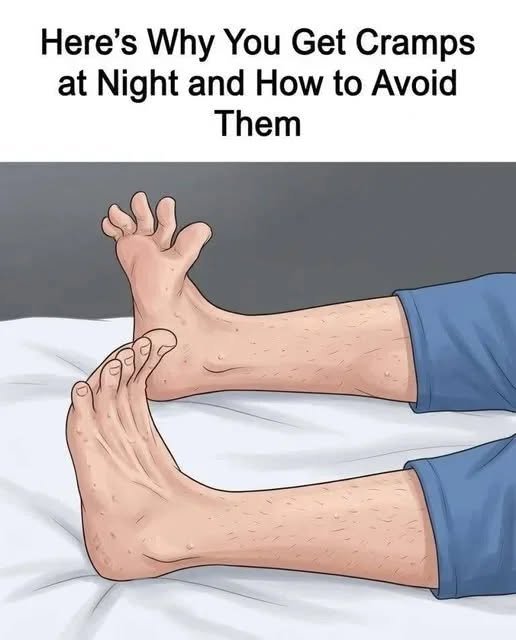
When you wake up in the middle of the night with a sudden, painful tightening in your calf, foot, or thigh—often called a nocturnal leg cramp or “charley horse”—it is usually caused by an involuntary misfire of the motor nerves connected to your muscles.
While most nighttime leg cramps are harmless (even if excruciating in the moment), identifying the trigger makes them much easier to prevent.
7 Common Causes of Nighttime Leg Cramps
-
Muscle Fatigue and Overexertion: Intense workouts, heavy lifting, or standing on hard floors all day can overstimulate your motor neurons, causing them to keep firing even after you go to sleep.
-
Prolonged Sitting or Poor Sleeping Posture: Sitting at a desk for hours shortens your calf muscles over time. Similarly, sleeping with your toes pointed downward (plantar flexion) under heavy blankets keeps the calf muscle in a shortened position, priming it to spasm.
-
Dehydration: Even mild fluid loss reduces blood volume and alters the fluid balance around nerve endings, making nerves hyper-excitable.
-
Electrolyte Imbalances: Low levels of magnesium, potassium, or calcium disrupt the electrical signals that tell muscles when to contract and when to relax.
-
Medication Side Effects: Certain common prescriptions trigger cramps—most notably diuretics (water pills, which flush out electrolytes), statins (cholesterol medications), and some asthma or blood pressure drugs.
-
Pregnancy: Extra weight, increased pressure on leg nerves and blood vessels, and higher mineral demands make nighttime cramps especially common in the second and third trimesters.
-
Age-Related Nerve and Tendon Changes: Adults over 50 experience nighttime cramps much more frequently because tendons naturally shorten with age and motor neurons gradually decline.
(Note: Frequent cramps can occasionally point to underlying issues like poor circulation/peripheral artery disease, nerve compression in the lower back, or thyroid disorders.)
How to Stop a Cramp Immediately (In the Moment)
When a cramp hits at 2:00 AM, the fastest way to shut off the misfiring nerve signal is to forcibly lengthen the contracting muscle:
-
The Toe-Pull Stretch: Sit up, straighten your cramped leg, and pull your toes and foot upward toward your shin (dorsiflexion). Hold for 20–30 seconds until the spasm releases.
-
Stand and Put Weight on It: Get out of bed, place your foot flat on the cool floor, and press your weight firmly onto the cramped leg while leaning slightly forward.
-
Massage and Apply Heat: Once the acute spasm eases, gently knead the tight muscle knot with your hands or apply a warm towel/heating pad to restore blood flow.
Natural Ways to Prevent Them Long-Term
-
Do a 2-Minute Calf Stretch Before Bed: Stand facing a wall at arm’s length, place one foot back with the heel flat on the floor, and lean forward until you feel a gentle pull in your calf. Hold 30 seconds per leg before getting into bed.
-
Loosen Your Bed Sheets: Untuck heavy sheets or blankets at the foot of your bed so they don’t force your toes to point downward while you sleep.
-
Stay Consistently Hydrated: Drink water steadily throughout the day rather than chugging a huge glass right before bed (which just wakes you up to use the bathroom).
-
Eat Electrolyte-Rich Foods: Focus on whole food sources rather than megadose supplements—bananas, spinach, pumpkin seeds, almonds, yogurt, and sweet potatoes cover potassium, magnesium, and calcium naturally. (Note: High-dose quinine—once found in tonic water—is no longer recommended by doctors due to serious side effects.)
When to See a Doctor: Schedule a checkup if your cramps happen multiple times a week, severely disrupt your sleep, come with leg swelling, redness, or skin changes, or are accompanied by muscle weakness.