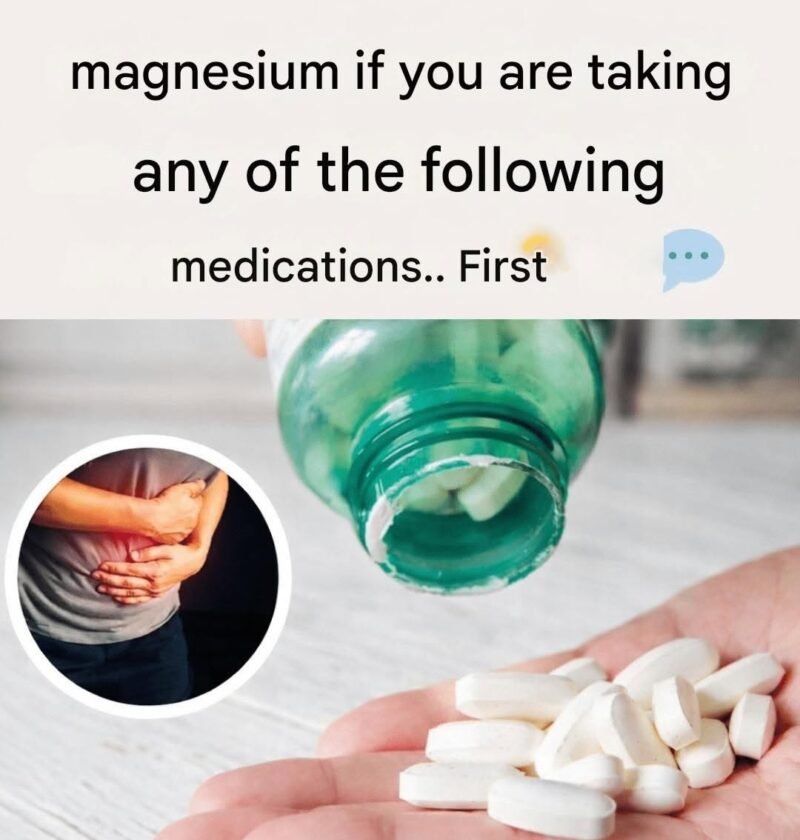
The headline “Never use magnesium if you are taking…” is too absolute. Magnesium supplements can interact with certain medicines, but the solution is often to separate the doses by several hours, change the magnesium preparation, or monitor levels—not necessarily avoid magnesium altogether.
Medicines that can interact with magnesium
-
Certain antibiotics — Magnesium can bind to antibiotics such as tetracyclines (e.g., doxycycline) and fluoroquinolones (e.g., ciprofloxacin), reducing how much of the antibiotic is absorbed. They generally need to be taken at different times.
-
Levothyroxine — Magnesium-containing products can reduce absorption of thyroid hormone medication. Separating the doses is usually recommended.
-
Bisphosphonates — Medicines such as alendronate can have reduced absorption when taken with magnesium or other mineral supplements.
-
Some osteoporosis medications — Similar absorption issues can occur with certain oral bone medicines.
-
Diuretics (“water pills”) — Some diuretics can alter magnesium levels. The interaction depends on the specific drug and kidney function.
-
Proton-pump inhibitors (PPIs) — Long-term use of drugs such as omeprazole can contribute to low magnesium levels in some people.
-
Other mineral supplements or antacids/laxatives containing magnesium — Taking multiple magnesium-containing products can unintentionally produce a high total dose and cause diarrhea or, in people with impaired kidney function, potentially dangerous magnesium accumulation.
Especially important: kidney disease
Your kidneys normally remove excess magnesium. People with significant kidney impairment should not start magnesium supplements without medical advice, because magnesium can accumulate in the blood.
Also, don’t stop a prescribed medication just because you’re taking magnesium. A pharmacist or doctor can check your specific medication list and determine whether timing or dosage needs adjustment.
If you give me the name and dose of your medication(s) plus the type of magnesium (magnesium citrate, glycinate, oxide, etc.), I can explain the specific interaction.