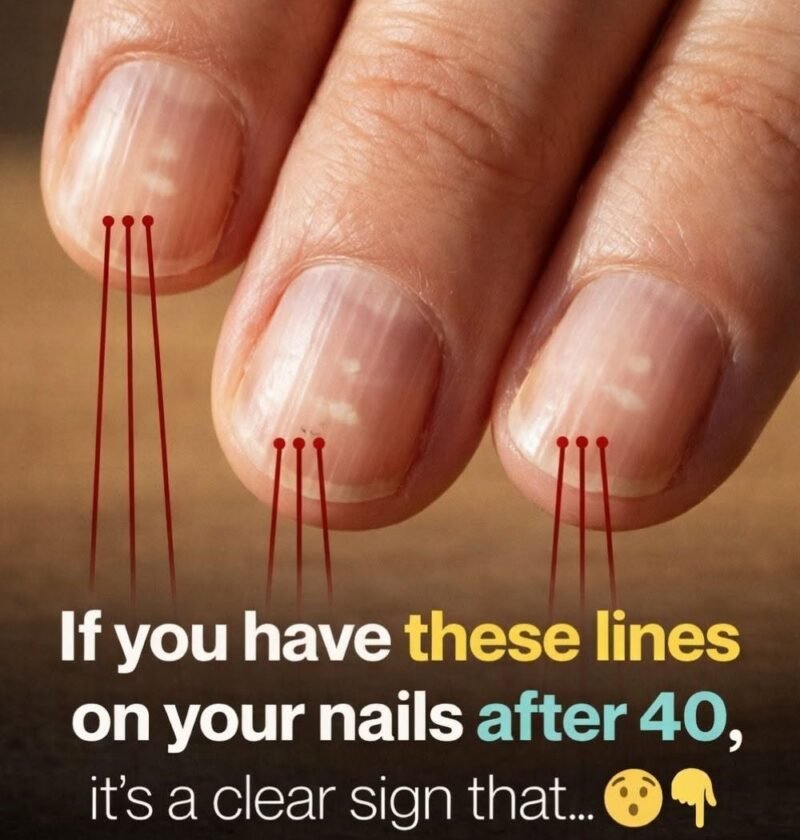
💅 Vertical Lines on Your Nails After 40: What Do They Mean?
If you mean vertical ridges running from the cuticle toward the tip, they’re usually not a clear sign of a specific disease. They become increasingly common with age as nail growth changes and the nail plate becomes less smooth.
Common explanations
- Normal aging: Fine vertical ridges are very common in middle age and later life.
- Dry nails or skin: Frequent handwashing, soaps, detergents, or low humidity can make ridges more noticeable.
- Nail trauma: Repeated minor injury to the nail or cuticle can create irregularities.
- Nutritional deficiencies: Iron deficiency and some other nutritional problems can affect nails, but vertical ridges alone cannot diagnose a deficiency.
- Certain skin or systemic conditions: Conditions such as eczema, psoriasis, or other illnesses can sometimes alter nail appearance.
🚩 When nail changes deserve attention
See a healthcare professional if the change is new and pronounced, affects many nails suddenly, or occurs with other symptoms such as significant fatigue, hair loss, unexplained weight change, or changes in your general health.
A dark or brown/black vertical band, especially one affecting only one nail and becoming wider or changing color, is different from ordinary ridging and should be examined by a dermatologist because, rarely, it can represent melanoma of the nail.
What you can do
Keep nails moisturized, avoid picking or cutting the cuticles, wear gloves when working with detergents, and maintain a balanced diet. Don’t start iron or other supplements solely because you have nail ridges unless a deficiency has been confirmed.
Bottom line: Vertical nail ridges after 40 are usually a normal age-related change, not a “clear sign” of vitamin deficiency or serious disease. The pattern and color of the nail change matter much more than the presence of ridges alone.