9 Common Foot Warning Signs & What They Usually Mean
-
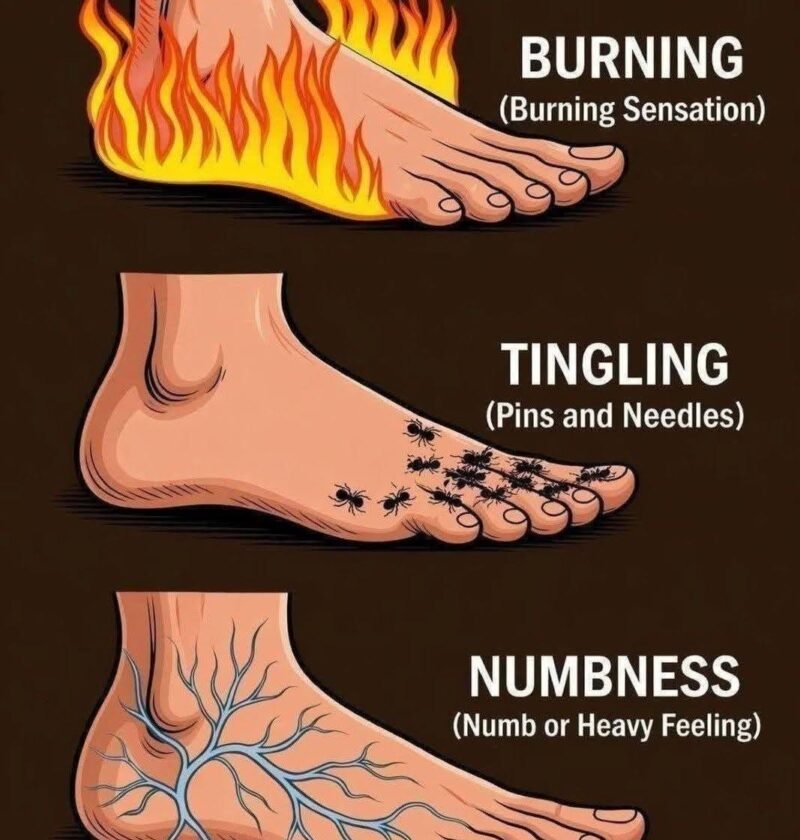
Numbness, Tingling, or “Pins and Needles”
-
What it points to: Peripheral neuropathy—most commonly caused by diabetes (high blood sugar damaging nerve fibers), Vitamin B12 deficiency, alcohol overuse, or a pinched nerve in the lower back.
-
-
Burning or Sharp Shooting Pain (Especially at Night)
-
What it points to: Nerve irritation or small-fiber neuropathy, often linked to blood sugar fluctuations, thyroid imbalances, or nerve compression (like tarsal tunnel syndrome).
-
-
Persistently Cold Feet
-
What it points to: Reduced blood flow from Peripheral Artery Disease (PAD), hypothyroidism (an underactive thyroid), iron-deficiency anemia, or Raynaud’s phenomenon.
-
-
Sores, Cuts, or Blisters That Heal Slowly
-
What it points to: A hallmark warning sign of diabetes and impaired arterial circulation, where reduced blood supply and nerve damage delay tissue repair and raise infection risk.
-
-
Swelling in Both Feet and Ankles (Pitting Edema)
-
What it points to: Fluid retention, which can range from prolonged sitting/standing or medication side effects (like calcium channel blockers) to heart failure, kidney disease, liver disease, or chronic venous insufficiency.
-
-
Hair Loss on Toes and Shiny, Thin, or Discolored Skin
-
What it points to: Peripheral Artery Disease (PAD). When arteries narrow, skin and hair follicles on the lower legs and feet don’t receive enough oxygen-rich blood, causing smooth, shiny skin and slow-growing toenails.
-
-
Cramping in the Feet or Calves When Walking (That Stops With Rest)
-
What it points to: Intermittent claudication (a classic sign of PAD), where leg and foot muscles run short of oxygenated blood during exertion.
-
-
Sudden Severe Pain, Redness, and Heat in One Joint (Often the Big Toe)
-
What it points to: Gout (uric acid crystal buildup), though joint infection (septic arthritis) or acute injury must also be ruled out.
-
-
Thickened, Yellowed, or Crumbly Toenails
-
What it points to: Usually a localized fungal nail infection (onychomycosis) or repetitive shoe friction—more common in people with diabetes or reduced circulation, though not a sign of internal organ failure on its own.
-
When to Seek Prompt or Emergency Care
-
Seek urgent same-day care if you notice a new foot sore or ulcer (especially if you have diabetes), spreading redness/warmth, pus, or sudden swelling, pain, and warmth in one leg/foot (a possible blood clot).
-
Seek immediate emergency care (in Pakistan, call Rescue 1122 or go to the nearest emergency hospital) if a foot suddenly becomes cold, pale or bluish, severely painful, and numb (acute arterial blockage), or if foot swelling is paired with shortness of breath or chest pain.