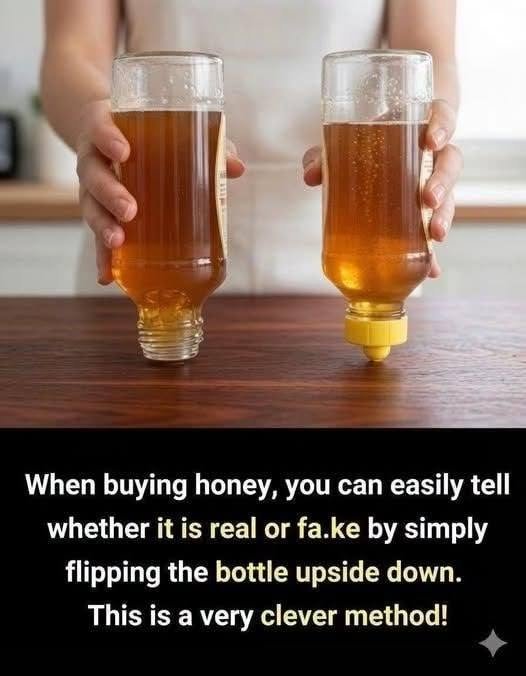
With honey being one of the most frequently adulterated foods in the world—often cut with cheap high-fructose corn syrup, cane sugar, or glucose water—knowing how to spot the real deal from fake or diluted honey is a handy kitchen skill.
While laboratory testing (like nuclear magnetic resonance) is the only 100% foolproof method, several simple at-home tests can help you catch heavily adulterated honey.
1. The Water Test (The Density & Dissolution Check)
Pure honey is dense, viscous, and dissolves very slowly because it has very low water content.
-
How to do it: Drop a single tablespoon of honey into a glass of room-temperature water.
-
Real Honey: It will sink straight to the bottom of the glass in a single lump or thick ribbon and will stay mostly intact until you aggressively stir it.
-
Fake/Adulterated Honey: Because it is often watered down with sugar syrups, it will start dissolving, clouding the water, or melting away before it even hits the bottom.
2. The Thumb Test (The Stickiness Check)
-
How to do it: Put a tiny drop of honey on your thumb and rub it between your thumb and index finger.
-
Real Honey: Pure honey is sticky, but it will eventually absorb or roll into a smooth residue because of its natural enzymes.
-
Fake Honey: If it feels overly sticky, tacky, or gummy, it likely contains artificial sweeteners or corn syrup, which leave a sticky sugar residue behind.
3. The Flame Test (The Moisture Check)
Pure honey does not contain excess water, meaning it can theoretically catch fire. (Caution: Perform this safely over a sink with a dry cotton swab).
-
How to do it: Dip a clean cotton swab or matchstick into the honey, shake off the excess, and try to light it with a lighter or match.
-
Real Honey: The cotton will catch fire and burn because pure honey has virtually no water content.
-
Fake Honey: The high water content in adulterated or syrup-cut honey will create a crackling sound, sputter, and refuse to burn.
4. The Crystalization Test (The Ultimate Time Test)
-
The Rule: Real, raw honey will crystallize over time, turning cloudy, grainy, or solid (especially in cooler temperatures). This is a natural chemical process caused by its glucose content.
-
The Exception: Fake honey, corn syrup, or highly processed, ultra-filtered commercial honey will stay perfectly liquid, clear, and runny indefinitely because synthetic sugars don’t have the natural compounds needed to crystallize.
The Best Way to Guarantee Real Honey
Home tests can catch cheap sugar syrups, but sophisticated commercial adulteration can sometimes pass them. To ensure you are getting 100% real honey:
-
Buy Local: Purchase raw, unpasteurized honey directly from local beekeepers or farmers’ markets.
-
Check the Ingredients: The ingredient list on the label should say 100% pure honey—with no added cane sugar, glucose, or high-fructose corn syrup.