Small white spots on the
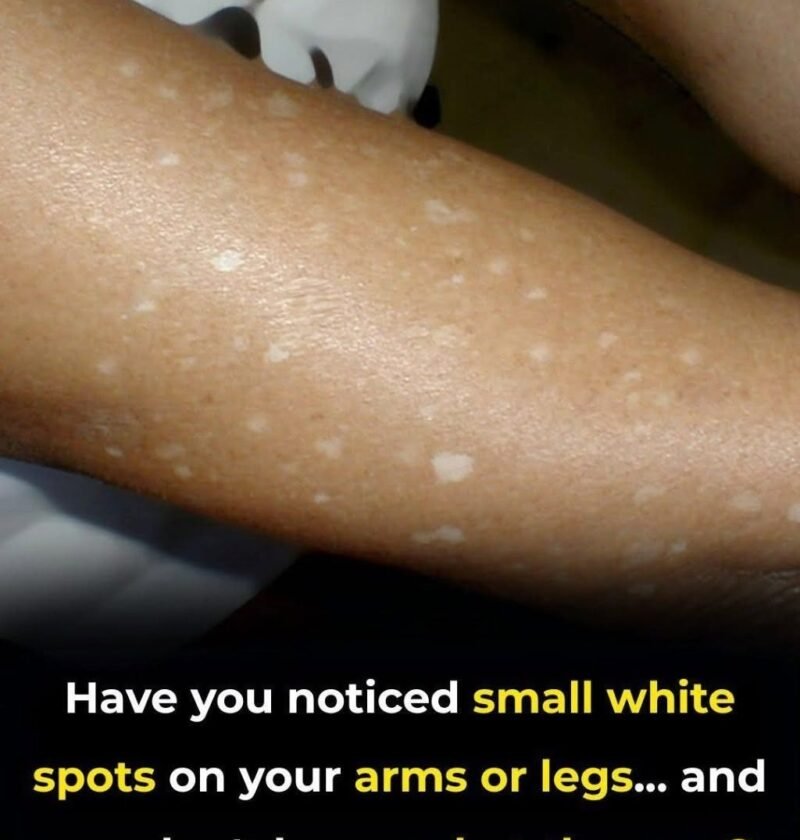
arms or legs are often harmless, but there are several possible causes. The appearance, texture, and whether they
are spreading make a big difference.
Common possibilities
- Idiopathic guttate hypomelanosis (IGH): Tiny, flat, smooth, porcelain-white spots—often 2–6 mm—commonly appearing on the forearms and shins, especially with increasing age and cumulative sun exposure. They are harmless and aren’t contagious.
- Sun-related pigment changes: Sun exposure can make surrounding skin darker, making naturally lighter areas more noticeable.
- Vitiligo: Usually produces larger, sharply defined areas of depigmented skin. It can gradually enlarge or appear in new locations and may affect the hands, face, elbows, knees, or other areas.
- Fungal infection (tinea versicolor): More often causes multiple lighter or darker patches, sometimes with fine scaling or mild itching. It commonly affects the trunk but can occur elsewhere.
- Post-inflammatory hypopigmentation: A lighter spot can remain after eczema, an these conditions by examining the skin and, when necessary, using a Wood’s lamp or other testing injury, a rash, or another skin inflammation has healed.
When should you have it checked?
See a dermatologist or doctor if the spots are rapidly increasing, spreading, itchy or scaly, painful, bleeding, changing appearance, or associated with loss of pigment around the eyes, mouth, or hair. A clinician can usually distinguish these conditions by examining the skin and, when necessary, using a Wood’s lamp or other testing.
Don’t assume every white spot is a vitamin deficiency or fungus. The treatment depends on the cause, and some harmless pigment changes don’t require treatment at all.
If you describe the spots (size, exact location, whether they’re completely white or just lighter, smooth vs. scaly, and whether they’ve been spreading), I can help narrow down the possibilities.