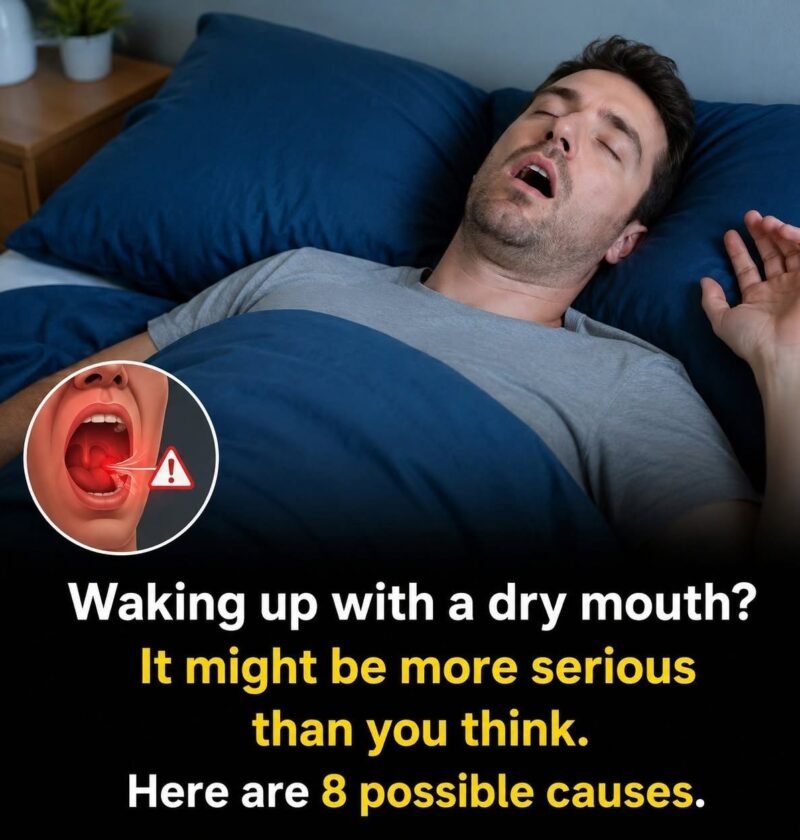
Dry Mouth at Night: 8 Warning Signs You Shouldn’t Ignore
Waking up with a dry mouth occasionally is usually not dangerous. It can happen because of dehydration, sleeping with your mouth open, snoring, alcohol, or certain medicines. Persistent dry mouth, however, deserves attention because saliva protects your teeth and mouth.
8 signs to pay attention to
- Dry mouth that persists for weeks despite drinking enough fluids.
- Difficulty swallowing or chewing because there isn’t enough saliva.
- Difficulty speaking or a sticky feeling in the mouth.
- Painful, red, swollen, or bleeding mouth.
- White patches or sores that don’t go away.
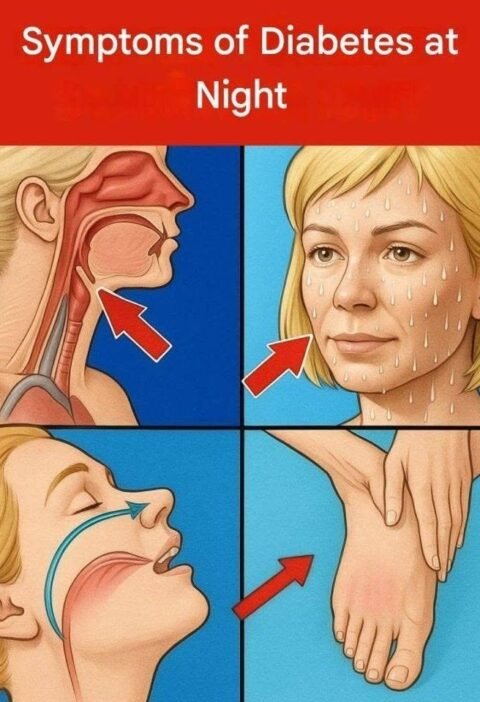
- Frequent thirst and urination, which can sometimes occur with conditions such as diabetes.
- Dry eyes along with dry mouth, which can occur with certain autoimmune conditions.
- Increasing tooth decay or gum problems because reduced saliva makes the mouth more vulnerable.
Common causes
Many medicines can cause dry mouth, including some used for high blood pressure, depression, anxiety, allergies, pain, and congestion. Mouth breathing and snoring at night are also common causes.
What you can try
Keep water beside your bed and take small sips when needed. During the day, sugar-free gum or sugar-free sweets can stimulate saliva. Avoid excessive alcohol and caffeine, and use fluoride toothpaste to protect your teeth. A humidifier at night may also help.
Don’t stop a prescribed medicine on your own, even if you suspect it is causing the dryness. Ask your doctor or pharmacist about alternatives.