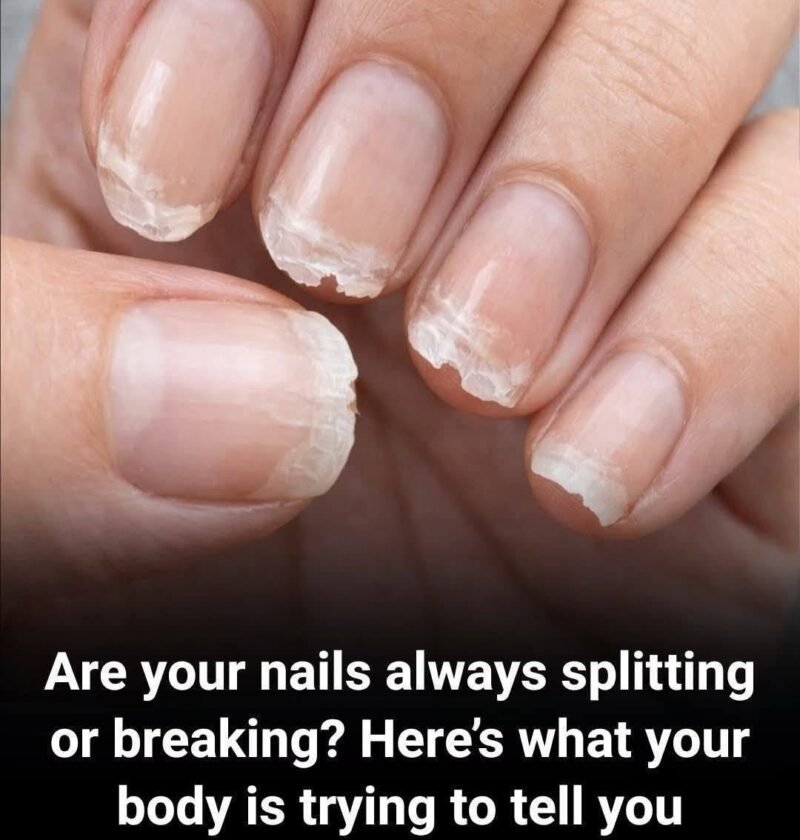
Brittle, splitting, or fragile nails are common and usually not a sign of one specific disease. They can result from everyday exposure to water and chemicals, aging, nutritional issues, or certain medical conditions.
What brittle nails can sometimes indicate
- Frequent water exposure: Repeatedly wetting and drying nails can make them split.
- Cleaning chemicals and detergents: These can dry and weaken the nail plate.
- Nail polish, acetone, or gel manicures: Frequent use or removal can damage nails.
- Iron deficiency: Can sometimes be associated with brittle or spoon-shaped nails, particularly when other symptoms of anemia are present.
- Thyroid disorders: Changes in nail growth or texture can occur with thyroid disease.
- Fungal nail infection: More likely if the nail is thickened, discolored, crumbly, or separating from the nail bed.
- Psoriasis or other skin conditions: Can cause pitting, ridges, thickening, or separation.
- Aging: Nails commonly become thinner and more fragile with age.
What you can do
Keep nails reasonably short, use a moisturizer or petroleum jelly on the nails and surrounding skin, and wear gloves when washing dishes or handling cleaning products. Avoid aggressively buffing the nail surface and give frequent gel/acrylic manicures a break if your nails are damaged.
Don’t automatically start taking biotin or iron supplements. Supplements are most useful when a deficiency has been identified, and excess iron can be harmful.
When to get checked
See a healthcare professional if nail changes are new, persistent, severe, affecting several nails, or accompanied by fatigue, unexplained weight changes, hair loss, skin changes, or other symptoms.
A nail that suddenly becomes dark, painful, swollen, or develops a new dark streak should also be assessed rather than assumed to be a nutritional deficiency.
Bottom line: brittle nails can occasionally provide a clue about an underlying problem, but they’re much more often related to moisture, chemicals, nail treatments, or normal aging.