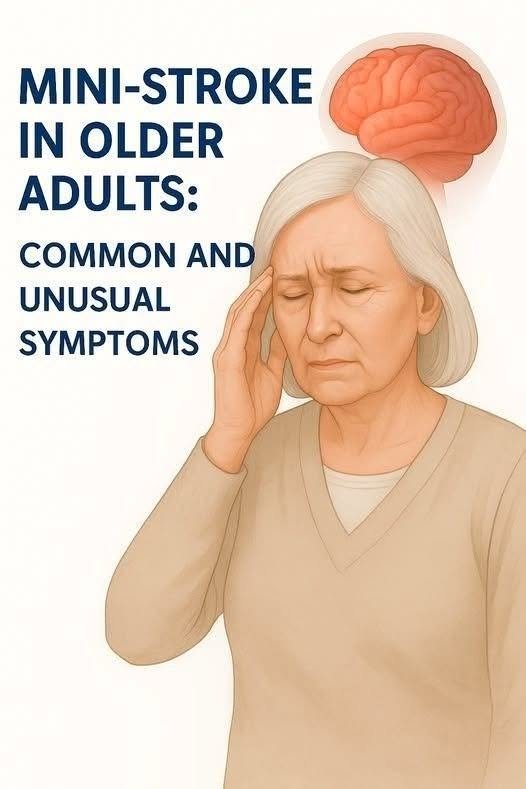
🚨 5 Critical Signs of a “Mini-Stroke” in Older Adults
A transient ischemic attack (TIA) is often called a “mini-stroke.” It can cause temporary stroke-like symptoms when blood flow to part of the brain is interrupted. Even when symptoms disappear, a TIA requires urgent medical evaluation because it can precede a major stroke.
Watch for these sudden changes:
Face drooping or numbness
One side of the face may suddenly droop, especially when smiling.
Weakness or numbness on one side
An arm or leg may suddenly become weak, numb, or difficult to control.
Sudden speech or language difficulty 🗣️
Speech may become slurred, or the person may suddenly have trouble speaking or understanding others.
Sudden vision problems 👁️
Temporary loss of vision, double vision, or sudden severe blurring can occur.
Sudden loss of balance or coordination
Unexpected dizziness, difficulty walking, or loss of coordination can be a warning sign, particularly when it occurs with other neurological symptoms.
Remember BE FAST
B — Balance: sudden loss of balance
E — Eyes: sudden vision changes
F — Face: facial drooping
A — Arms: weakness or numbness
S — Speech: speech difficulty
T — Time: seek emergency medical help immediately
You do not need to have all five signs. One sudden neurological symptom can warrant emergency assessment.
⚠️ Don’t wait for symptoms to go away
A TIA and a stroke cannot be reliably distinguished at home. If symptoms are occurring now, call your local emergency service immediately, even if they have already improved. Note when the symptoms started—or the last time the person was known to be well.
Bottom line: A TIA isn’t a normal consequence of aging. Prompt evaluation can identify the cause and allow treatment to reduce the risk of a subsequent stroke.