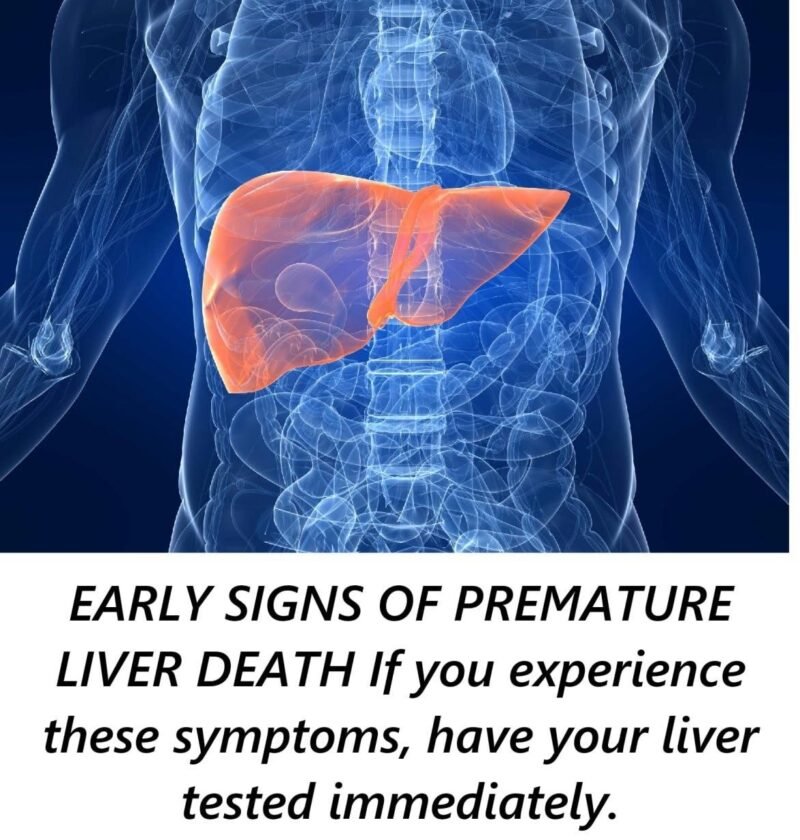
Think You’re in Good Health? Your Liver Might Disagree—12 Warning Signs to Know
Liver disease can sometimes develop with few or no obvious symptoms in its early stages, so feeling healthy doesn’t necessarily mean everything is fine. However, these signs are not specific to liver disease and can have many other causes.
Here are 12 changes worth discussing with a healthcare professional if they’re persistent or unexplained:
Unusual fatigue or weakness — ongoing tiredness can occur with liver problems but is very nonspecific.
Loss of appetite — a persistent decrease in appetite can accompany liver disease.
Nausea or vomiting — especially when recurrent or accompanied by other symptoms.
Unexplained weight loss — losing weight without trying warrants medical evaluation.
Abdominal discomfort or swelling — particularly in the upper-right abdomen or increasing abdominal size.
Swollen legs or ankles — fluid retention can occur with advanced liver disease, although there are many other causes.
Yellowing of the eyes or skin (jaundice) — this can indicate a buildup of bilirubin and should be medically assessed.
Dark urine — especially when accompanied by jaundice or unusually pale stools.
Pale or clay-colored stools — can occur when bile flow is impaired.
Persistent itching — generalized itching can sometimes occur with certain liver or bile-duct disorders.
Easy bruising or unusual bleeding — advanced liver disease can interfere with normal blood clotting.
Confusion, unusual sleepiness, or personality changes — these can occur in serious liver disease and require prompt medical attention.
🚨 Don’t wait on certain symptoms
New jaundice, vomiting blood, black/tarry stools, severe abdominal swelling, marked confusion, extreme sleepiness, or significant bleeding can indicate a serious condition and require urgent medical care.
How do you actually check your liver?
Symptoms alone cannot tell you whether your liver is healthy. A healthcare professional may use blood tests, imaging, and sometimes other tests depending on your symptoms and risk factors.
Common liver blood tests can include measurements such as ALT, AST, alkaline phosphatase, bilirubin, albumin, and other markers.
Bottom line: Don’t assume that feeling well proves your liver is healthy—but don’t assume every one of these symptoms means liver disease either. Persistent or unexplained changes deserve proper medical evaluation rather than a “detox” or supplement.