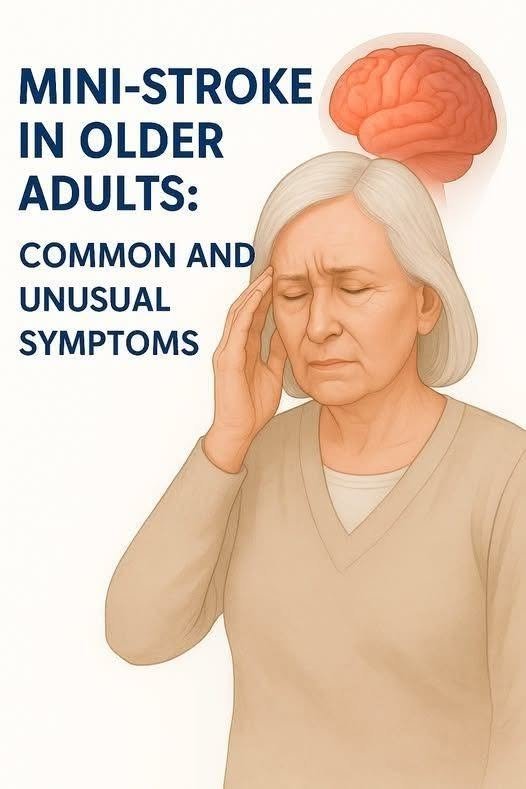
A “mini-stroke” is usually a transient ischemic attack (TIA). Its symptoms can disappear quickly, but a TIA is still a medical emergency because it can precede a major stroke.
5 Critical Signs of a Mini-Stroke in Older Adults
Sudden facial drooping
One side of the face may become weak or numb. Ask the person to smile and look for an uneven smile.
Sudden weakness or numbness
Especially in one arm or leg, particularly when it affects only one side of the body.
Sudden speech or language problems
Speech may become slurred, confused, or difficult to produce. A person may also suddenly have trouble understanding others.
Sudden vision changes
Temporary loss of vision, double vision, or sudden blurring in one or both eyes can be a warning sign.
Sudden trouble walking, dizziness, or loss of balance
New difficulty walking, severe coordination problems, or unexplained dizziness can occur with a TIA or stroke.
Don’t Wait for Symptoms to Disappear
The most important misconception about a “mini-stroke” is that it’s harmless because the symptoms go away. They’re not. A TIA can be a warning that a more serious stroke is coming.
Remember FAST:
F — Face: Is one side drooping?
A — Arms: Is one arm weak or numb?
S — Speech: Is speech suddenly abnormal?
T — Time: Call emergency medical services immediately.
Even if the symptoms resolve after a few minutes, urgent medical evaluation is still needed. Don’t wait for another episode and don’t drive the person yourself if emergency services are available.
Also, not every episode of dizziness, weakness, or confusion is a TIA. Other conditions can produce similar symptoms, which is why prompt professional assessment is important.