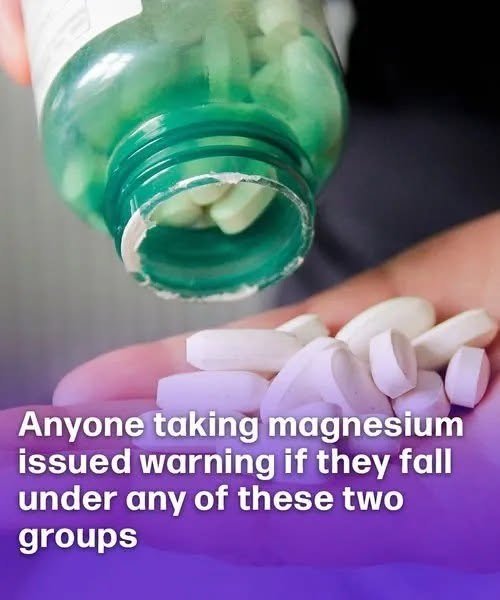
Yes. The warning is mainly about taking magnesium supplements without considering kidney function, dose, and medications. Magnesium itself is an essential mineral and is generally safe when obtained from food, but concentrated supplements can cause problems in certain people.
The two groups that deserve particular caution
1. People with kidney disease or reduced kidney function
This is the clearest high-risk group. Your kidneys normally remove excess magnesium through urine. When kidney function is impaired, magnesium can accumulate in the blood, potentially causing hypermagnesemia (magnesium toxicity). (NCBI)
Severe toxicity can cause:
- nausea, vomiting and diarrhea
- muscle weakness
- low blood pressure
- slowed or abnormal heart activity
- difficulty breathing
- in extreme cases, cardiac arrest or respiratory paralysis (NCBI)
The risk is particularly relevant when magnesium-containing laxatives or antacids are used in addition to supplements.
2. Older adults
Older people aren’t necessarily supposed to avoid magnesium. In fact, older adults are more likely to have inadequate magnesium intake. However, aging can reduce magnesium absorption and kidney excretion, while older adults are also more likely to have chronic illnesses and take medications that affect magnesium levels. (ODs)
So the concern is self-prescribing high-dose magnesium, particularly when kidney function or medications haven’t been considered.
How much is too much?
For adults, the U.S. NIH lists 350 mg/day as the tolerable upper intake level from magnesium supplements and medications. Importantly, this limit doesn’t apply to magnesium naturally present in food. (ODs)
For comparison, the recommended total daily intake—including food—is approximately:
- Men: 400–420 mg/day
- Women: 310–320 mg/day
That doesn’t mean a 400-mg supplement is automatically dangerous. The 350-mg limit specifically concerns supplemental/medication magnesium, and doctors sometimes prescribe higher doses for particular medical reasons. (Healthline)
What about healthy people?
For someone with normal kidney function, serious magnesium toxicity is uncommon. The most frequent problem from supplements is much less dramatic: diarrhea, abdominal cramping and nausea, especially with forms such as magnesium oxide or citrate. (HEALTH)
Also, “more magnesium” isn’t necessarily better. If you’re getting enough from food, taking a large supplement may provide little additional benefit.
One important distinction
Don’t confuse magnesium deficiency risk with magnesium toxicity risk.
Some people—including older adults, people with gastrointestinal disorders, type 2 diabetes, and people with alcohol dependence—are more likely to have inadequate magnesium. (ODs) That doesn’t mean they should automatically take large doses; the appropriate approach depends on diet, symptoms, medications and, when appropriate, laboratory testing.
Bottom line: The warning isn’t that magnesium supplements are inherently dangerous. It’s that high-dose supplementation shouldn’t be treated as harmless, particularly in people with kidney impairment and older adults, and anyone with kidney disease should discuss magnesium-containing supplements, laxatives or antacids with a healthcare professional before using them. (NCBI)
If you tell me your age, the magnesium type (glycinate/citrate/oxide/etc.) and the dose in mg on the label, I can explain whether that particular product and dose is within the usual supplemental range.