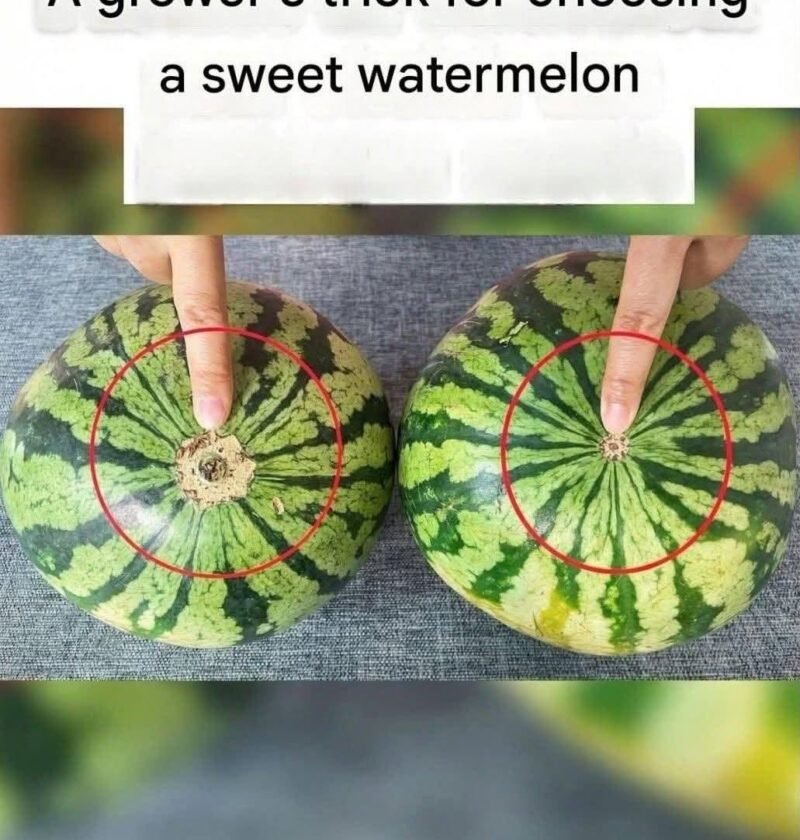
🍉 The Foolproof Visual Guide to Picking a Sweet Watermelon
You don’t need to thump every watermelon. While no visual test can guarantee sweetness, several outside clues can greatly improve your chances of choosing a ripe, juicy melon.
T
Texas A&M Stories
+1
1. Find the yellow “field spot”
This is the single clue I’d check first. Turn the watermelon over and look for the patch where it rested on the ground.
🟡 Creamy yellow to golden yellow: a good sign of maturity.
⚪ White or very pale: more likely to have been harvested before reaching full maturity.
A larger, creamy-yellow field spot is generally considered a stronger ripeness indicator.
T
Texas A&M Stories
+1
2. Pick it up
Choose a watermelon that feels heavy for its size. Watermelon is mostly water, so a heavier melon is generally a good sign of juiciness.
U
Union County Center
3. Look at the rind
A ripe watermelon often has a duller, less glossy appearance rather than a very shiny rind.
U
Union County Center
+1
4. Check the shape
Look for a symmetrical, evenly developed melon without major dents, soft spots, cracks, or bruising.
M
Martha Stewart
5. Don’t obsess over the “webbing”
Brown, web-like markings are sometimes associated with sweeter melons, but they’re best treated as a secondary clue, not a guarantee.
G
Good Housekeeping
6. If there’s still a stem attached
For melons picked directly from the vine, a brown, dry tendril near the fruit can indicate maturity. This isn’t usually useful with supermarket melons where the relevant vine parts have already been removed.
B
Burke County Center
The 10-second supermarket test
Flip → yellow spot → lift → choose the heavy one → check for damage.
And remember: watermelons don’t continue becoming sweeter after harvest, so choosing one that was mature when picked matters.
H
healthline.com
Bottom line: If you remember only one thing, look for a creamy-yellow field spot and a watermelon that feels heavy for its size. No thumping required. 🍉
T
U
M
Sources