Nighttime drooling: when it may deserve attention
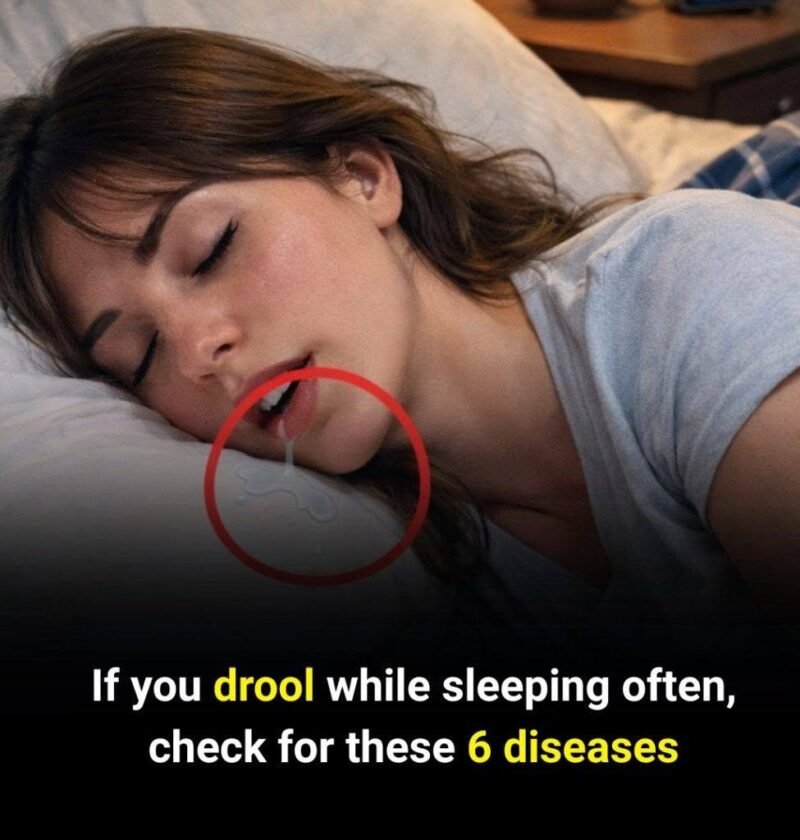
Drooling during sleep is often harmless, especially when you sleep on your side or stomach. But new, frequent, or excessive drooling can sometimes be associated with an underlying condition.
C
Cleveland Clinic
Six possibilities include:
Obstructive sleep apnea — particularly if drooling occurs along with loud snoring, pauses in breathing, gasping/choking during sleep, or significant daytime sleepiness.
C
Cleveland Clinic
+1
Difficulty swallowing (dysphagia) — saliva may accumulate when swallowing is impaired. Coughing or choking while eating, a wet/gurgly voice, or food feeling stuck are additional clues.
C
Cambridge University Hospitals
+1
Acid reflux/GERD — reflux can stimulate saliva production, and symptoms can become worse when lying down at night.
C
Cleveland Clinic
+1
Parkinson’s disease — drooling can occur because swallowing becomes slower or more difficult, rather than simply because the body produces too much saliva.
N
nhs.uk
+1
Neurological conditions or stroke — conditions affecting the nerves and muscles involved in swallowing can cause excessive drooling.
C
Cleveland Clinic
+1
Medication or oral/throat problems — certain medicines can increase saliva, while dental problems, infections, allergies and other conditions can also contribute.
C
Cleveland Clinic
+1
Don’t assume drooling means you have one of these conditions. By itself, nighttime drooling is usually nonspecific.
If drooling is new and persistent, or occurs with choking, difficulty swallowing, repeated chest infections, significant snoring/breathing pauses, or new neurological symptoms, it’s worth discussing with a healthcare professional. Sudden drooling accompanied by facial weakness, arm weakness, speech difficulty, or confusion requires emergency evaluation for possible stroke.
C
C
N
Sources