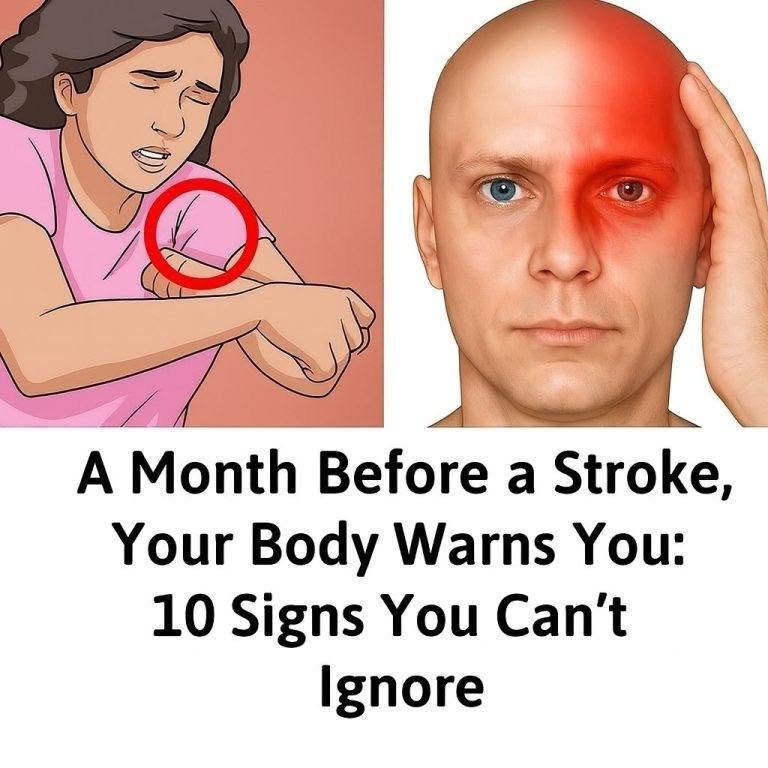
While a stroke can sometimes happen without warning, many people experience subtle or transient signs in the days and weeks leading up to a major cerebrovascular event—often referred to as “ministrokes” or Transient Ischemic Attacks (TIAs), as well as progressive arterial symptoms. Recognizing these early red flags can be life-saving.
Here are 10 early warning signs that your body may give you a month or weeks before a stroke:
1. Sudden Weakness or Numbness (Transient Ischemic Attack)
-
What it feels like: A brief, sudden loss of strength or a “pins and needles” sensation, typically affecting just one side of the face, arm, or leg.
-
Why it happens: A temporary blockage in a blood vessel reduces blood flow to a specific area of the brain, causing temporary neurological deficits that often resolve within minutes to hours.
2. Sudden Confusion or Trouble Speaking
-
What it feels like: Difficulty finding words, slurred speech, or a sudden inability to understand what others are saying. You might feel mentally “foggy” or disoriented out of nowhere.
-
Why it happens: Reduced blood flow to the language centers of the brain (such as Broca’s or Wernicke’s areas) temporarily disrupts cognitive processing and speech production.
3. Sudden Vision Changes
-
What it feels like: Blurring, double vision, dimming, or a sudden temporary loss of vision in one or both eyes. Some describe it as a shade or curtain pulling down over their field of vision.
-
Why it happens: Ischemia in the occipital lobe or the retinal artery can disrupt visual signals, often signaling unstable blood flow in the carotid arteries.
4. Unexplained Dizziness or Loss of Balance
-
What it feels like: Sudden vertigo, a feeling of the room spinning, clumsiness, or an unsteadiness in your gait that makes it difficult to walk straight.
-
Why it happens: When blood flow to the cerebellum or brainstem (the areas responsible for coordination and balance) is compromised, spatial orientation is disrupted.
5. Severe, Unexplained Headaches
-
What it feels like: A sudden, unusually severe headache often described as a “thunderclap” headache, or a persistent, nagging headache unlike your normal migraines or tension headaches.
-
Why it happens: This can indicate abnormal pressure, minor bleeding, or a warning tear (dissection) in the blood vessels supplying the brain.
6. Brief Episodes of Facial Droop
-
What it feels like: Looking in the mirror and noticing one side of your face sagging, or feeling a heavy, numb sensation in your cheek or mouth when trying to smile.
-
Why it happens: Temporary nerve signaling failures due to localized micro-strokes or reduced perfusion to facial motor areas.
7. Sudden Fatigue or Lethargy
-
What it feels like: Overwhelming, crushing exhaustion that comes on suddenly and doesn’t improve with rest, often accompanied by a general feeling of being unwell.
-
Why it happens: The brain is working overtime to compensate for struggling neural pathways and oxygen deprivation.
8. Difficulty Swallowing (Dysphagia)
-
What it feels like: A sudden hitch or choking sensation when eating or drinking, or a feeling that food is getting stuck in your throat.
-
Why it happens: Minor disruptions in the brainstem regions that coordinate the complex muscles of the throat and esophagus.
9. Cognitive “Hiccups” or Memory Gaps
-
What it feels like: Sudden lapses in short-term memory, trouble concentrating on routine tasks, or brief episodes of feeling detached from your surroundings.
-
Why it happens: Cumulative micro-vascular damage or reduced overall cerebral blood perfusion affecting executive function.
10. Mood and Personality Shifts
-
What it feels like: Uncharacteristic irritability, sudden bouts of depression, anxiety, or emotional lability (crying or laughing without clear cause).
-
Why it happens: Changes in blood flow to the frontal lobes—the brain’s emotional control center—can alter mood regulation and behavioral inhibition.
🚨 Critical Medical Warning: Never wait to see if symptoms pass. If you or someone nearby experiences any sudden signs of a stroke, use the FAST test (Face drooping, Arm weakness, Speech difficulty, Time to call 911) and seek emergency medical help immediately. Early intervention with clot-busting medications or procedures can prevent permanent brain damage.
Are you or a loved one currently experiencing any concerning neurological symptoms, or are you looking for ways to assess stroke risk factors?