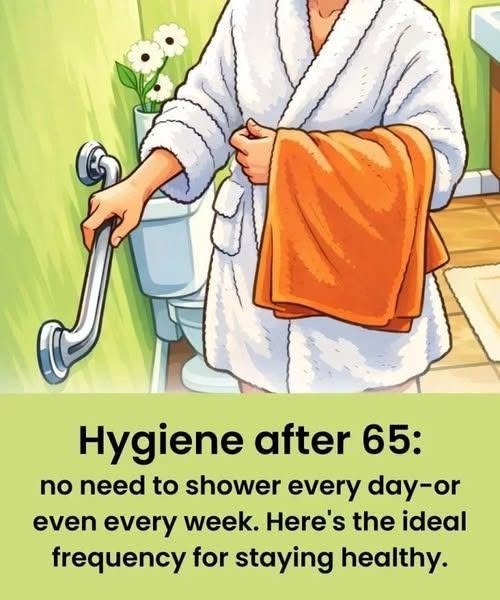
Articles warning that daily showers after age 65 “may do more harm than good” often use sensationalized headlines, but they highlight a very real, scientifically backed shift in how our skin ages and reacts to cleansing.
As we grow older, our skin undergoes natural biological changes that make daily, rigorous scrubbing unnecessary and potentially irritating. Here is what is actually happening and why dermatologists often recommend adjusting hygiene habits later in life:
Why Skin Changes After 65
-
Reduced Natural Oil Production: The sebaceous glands in the skin produce less sebum (oil) as we age, leading to chronic dryness.
-
Thinner Skin Barrier: The outermost layer of the skin becomes thinner and more fragile, making it harder to retain moisture and protect against environmental irritants.
-
Slower Cell Turnover: Healing and barrier repair take longer in older adults, meaning any damage caused by harsh cleansing takes more time to recover.
The Downsides of Daily Showering for Older Adults
-
Stripping Essential Lipids: Frequent scrubbing—especially with hot water and strong, fragrant soaps—strips away the remaining natural oils that keep the skin barrier intact.
-
Pruritus (Senior Itch) and Dermatitis: Stripped, dry skin frequently leads to severe itching, flaking, cracking, and a condition known as asteatotic eczema. Cracks in the skin can also increase the risk of minor infections.
A Better Hygiene Routine for Healthy Aging
Dermatologists generally recommend a few simple adjustments rather than abandoning hygiene altogether:
-
“Pits and Bits” Approach: Instead of a full-body scrub with soap every single day, focus daily soap use on areas prone to odor and bacteria (underarms, groin, and feet), while simply rinsing the limbs with warm water.
-
Lower the Temperature: Hot water feels relaxing, but it actively melts and strips away natural skin oils much faster than lukewarm water.
-
Moisturize Immediately: Apply a thick, fragrance-free cream or ointment within three minutes of stepping out of the shower while the skin is still damp to lock in hydration.
Do you or an older loved one find that skin tends to feel dry and itchy, especially during certain seasons of the year?