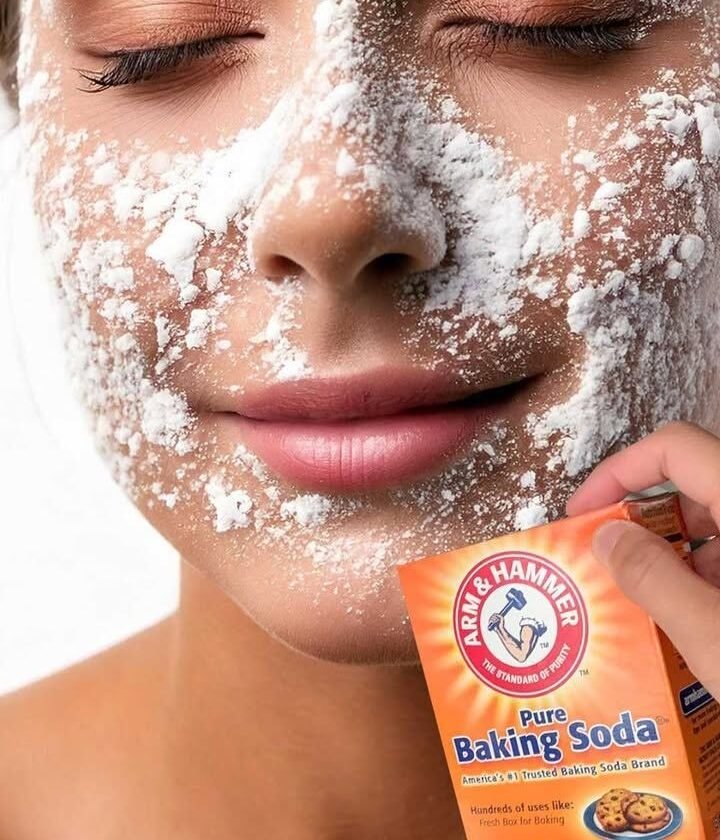
While DIY skincare remedies like baking soda are popular online for treating hyperpigmentation and age spots, dermatologists generally advise caution—and often avoidance—when using baking soda on the face.
Here is what you need to know about how baking soda affects the skin, the risks involved, and safer, more effective alternatives for addressing age spots.
Why Baking Soda is Risky for Skin
-
pH Disruption: Healthy skin naturally has a slightly acidic pH (between 4.5 and 5.5), known as the acid mantle, which protects against bacteria and moisture loss. Baking soda is strongly alkaline (around a pH of 9). Using it strips the skin’s natural oils, leading to severe dryness, irritation, and a compromised skin barrier.
-
Superficial Effect Only: Age spots (solar lentigines) are caused by excess melanin production deep within the lower layers of the epidermis. Baking soda only acts as a physical abrasive on the surface layer of dead cells. It cannot reach the source of pigmentation, and any temporary “brightening” is usually just the result of harsh surface exfoliation.
-
Potential for Worsening Damage: For many people—especially those with sensitive skin or medium-to-dark skin tones—the irritation caused by baking soda can trigger post-inflammatory hyperpigmentation, actually making dark spots darker.
Safer, Dermatologist-Approved Alternatives for Age Spots
If you want to fade age spots safely and effectively, look for targeted ingredients that regulate melanin production and gently speed up cell turnover without destroying your skin barrier:
-
Vitamin C: A powerful antioxidant that brightens existing dark spots and inhibits the enzyme responsible for melanin production.
-
Retinoids (Retinol / Tretinoin): Accelerate cellular turnover, pushing pigmented cells to the surface faster and encouraging fresh, even-toned skin growth.
-
Alpha-Hydroxy Acids (AHAs like Glycolic or Lactic Acid): Provide chemical exfoliation that is much more uniform and skin-friendly than harsh physical scrubs like baking soda.
-
Niacinamide: Helps block pigment from transferring to skin cells while soothing inflammation and strengthening the skin barrier.
-
Daily Sunscreen (SPF 30+): The absolute most critical step. Without daily sun protection, any treatment used to fade age spots will be undone by new UV exposure.
Important Note: If you notice an age spot changing rapidly in size, shape, or color, or if it has irregular borders, consult a dermatologist to rule out any underlying skin concerns before starting a treatment regimen.
Are you currently using any specific skincare products or active ingredients to help fade your age spots?