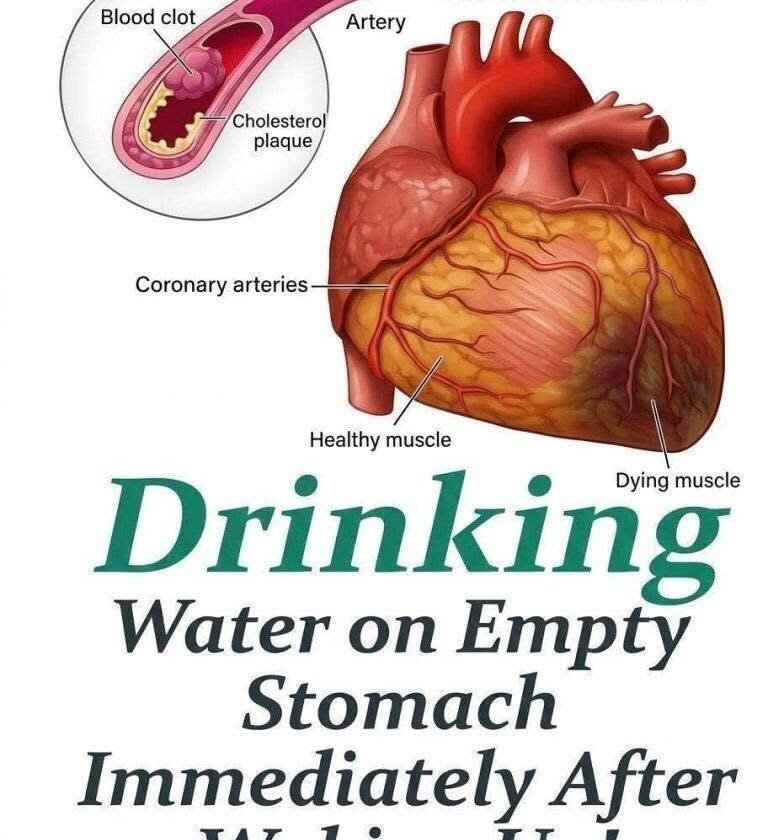
If you’re referring to the viral headline “Did you know that drinking water on an empty stomach could be…”, the missing ending is often something dramatic such as “detoxifying,” “boosting metabolism,” “flushing toxins,” or “improving digestion.”
The reality is much simpler:
💧 Is drinking water on an empty stomach beneficial?
Yes, drinking water when you wake up is perfectly reasonable—but there is nothing magical about drinking it before breakfast.
It rehydrates you. You lose water through breathing and urination while sleeping, so drinking water in the morning can help replace fluids.
It may help constipation. Adequate fluid intake supports normal bowel function, particularly when you’re also getting enough fiber.
It can help you feel full temporarily. Drinking water before a meal may reduce how much some people eat, although it isn’t a special weight-loss treatment.
It doesn’t “detox” your body. Your kidneys and liver already perform the body’s waste-processing functions.
It doesn’t meaningfully “boost metabolism” just because your stomach is empty. Claims of dramatic metabolism increases from morning water are not supported by good evidence.
How much should you drink?
There’s no universal requirement to drink a large glass—or several glasses—as soon as you wake up. Drink according to thirst and your overall fluid needs. Older adults sometimes have a reduced sense of thirst, so regular fluid intake throughout the day can be important.
If you have heart failure, kidney disease, or another condition requiring fluid restriction, don’t deliberately increase your water intake without following your clinician’s advice.
Bottom line: A glass of water on an empty stomach is a healthy habit if you enjoy it, but claims that it “flushes toxins,” melts belly fat, or cures disease are misleading.