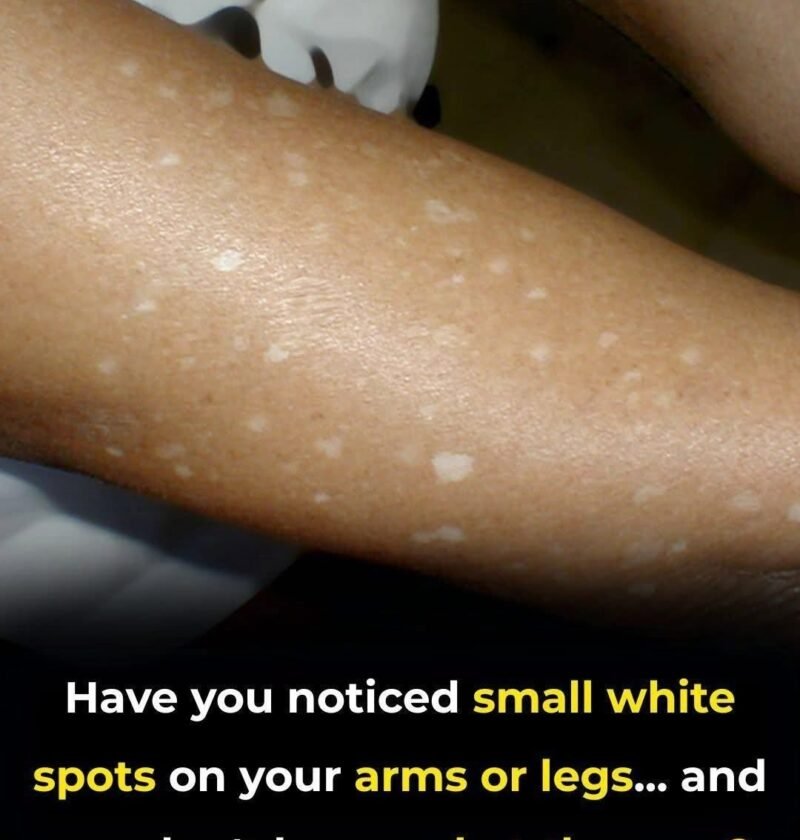
If you’re referring to the headline “Have you noticed small white spots on your arms or legs?”, one common explanation—especially in older adults—is idiopathic guttate hypomelanosis (IGH).
What is it?
IGH is a benign skin condition that causes multiple small, flat, pale or porcelain-white spots, usually on sun-exposed areas such as the forearms and lower legs. The spots are typically only a few millimeters across and usually don’t itch or hurt. It becomes increasingly common with age and is associated with cumulative sun exposure and skin aging.
D
DermNet®
+1
But white spots can have other causes
Similar-looking spots can occur with vitiligo, fungal infections such as pityriasis versicolor, or changes left behind after a rash, insect bite, injury, or inflammation. Their treatment is different, so it’s important not to assume every white spot is a vitamin or mineral deficiency.
D
DermNet®
+1
When should you see a dermatologist?
Have new or changing spots evaluated if they are spreading, becoming larger, developing scale or inflammation, or not improving, particularly if you’re unsure what they are. A dermatologist can usually distinguish the common causes by examining the skin and, when necessary, using a special light or dermoscopy.
D
DermNet®
+1
Bottom line: Small, stable white spots on the arms or legs are often harmless, and IGH is one common possibility—but a photograph or examination is needed to identify the actual cause. Don’t start supplements or skin treatments based solely on a social-media post.
D
Sources