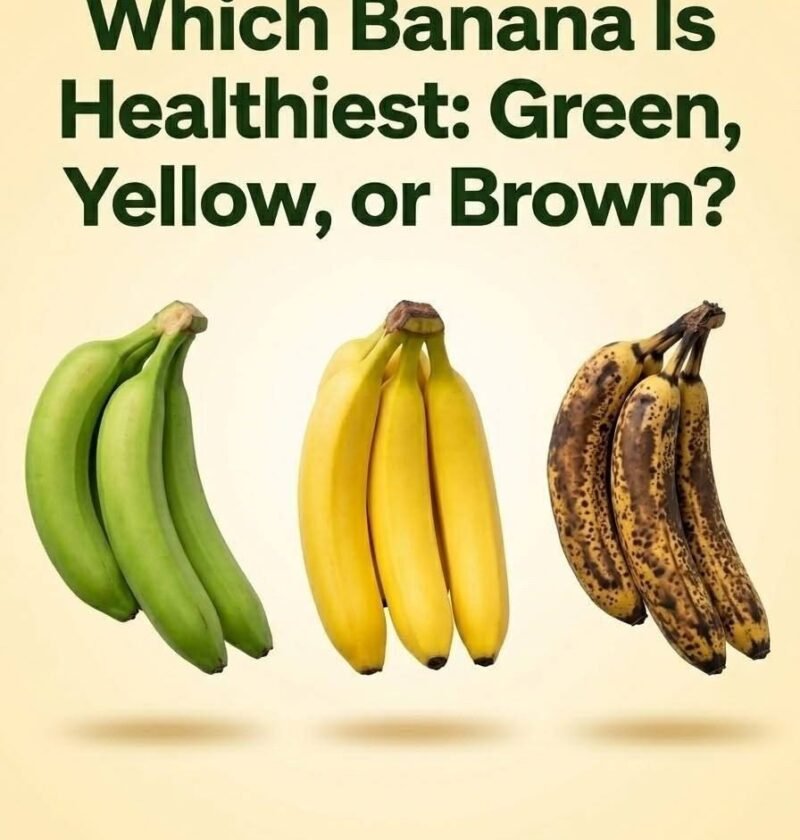
Which Banana Is Actually the Healthiest?
Green, yellow, spotted, or brown—does the color of a banana really make a difference?
Yes, but there isn’t one “healthiest” banana for everyone. As a banana ripens, its starches gradually break down into simpler sugars, changing its taste, texture, and how quickly its carbohydrates are digested.
🟢 Green bananas
Less ripe bananas contain more resistant starch, a type of carbohydrate that behaves somewhat like fiber and can support beneficial gut bacteria.
They tend to be firmer, less sweet, and less quickly digested than very ripe bananas.
🟡 Yellow bananas
This is the familiar middle stage: sweeter and softer than green bananas while still providing fiber, potassium, vitamin B6, and other nutrients.
For most people, a ripe yellow banana is an excellent everyday choice.
🟤 Yellow bananas with brown spots
As bananas ripen further, more of their starch is converted into sugars. They’re sweeter and softer, making them especially useful for smoothies, oatmeal, or baking.
That doesn’t mean they’re “unhealthy”—they’re still nutritious fruit.
🤎 Very brown or overripe bananas
These can be very sweet and soft, but they’re not automatically bad for you. They’re particularly useful for cooking and baking.
If the banana has mold, an unusual smell, or signs of spoilage, however, discard it.
🏆 So which one wins?
It depends on what you’re looking for.
🟢 More resistant starch: choose a greener banana.
🟡 Balanced taste and texture: choose a yellow banana.
🟤 Maximum sweetness for baking: choose a spotted or very ripe banana.
And remember: ripeness doesn’t turn a nutritious banana into a “bad” food.
The best banana is ultimately the one that fits your taste, digestion, and dietary needs. 🍌💛