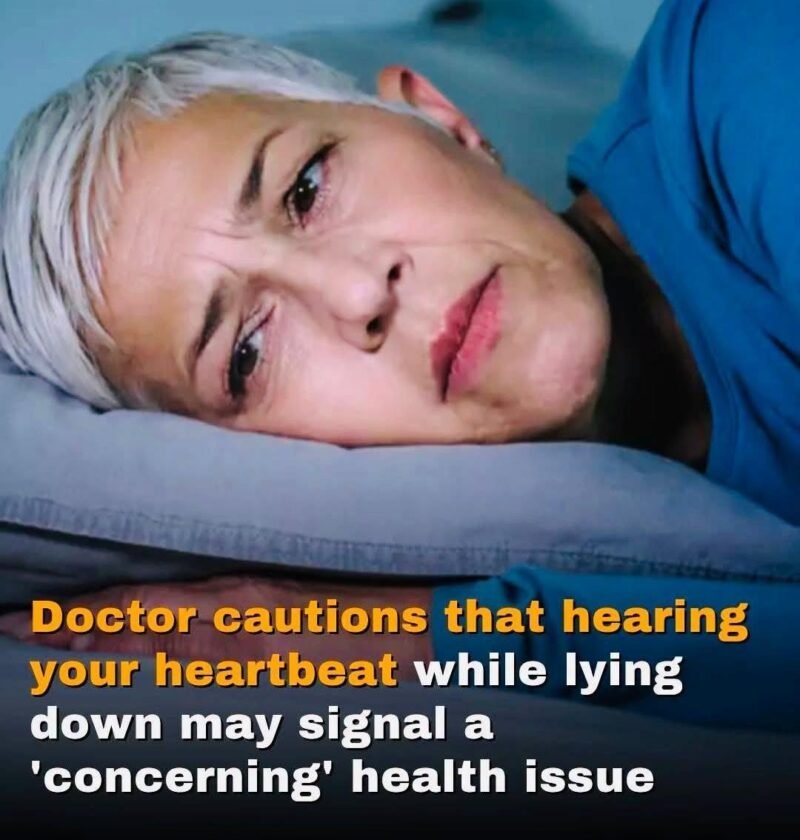
Doctor Cautions: Hearing Your Heartbeat While Lying Down Could Be Worth Checking
Have you ever gotten into bed, everything becomes quiet, and suddenly you can hear or feel your heartbeat?
Sometimes this is completely harmless. When you’re lying still, there are fewer distractions, so normal heartbeats or blood flow can become much more noticeable. Some people also experience palpitations more strongly at night.
But there’s an important distinction:
👂 Are you hearing your heartbeat in your ear?
If you hear a rhythmic whooshing, thumping, or pulsing sound that matches your heartbeat, this can be called pulsatile tinnitus.
It can have many possible causes, including high blood pressure, anemia, thyroid problems, changes in blood vessels, or conditions affecting pressure around the brain. Often, the cause is treatable or not dangerous—but persistent pulsatile tinnitus deserves medical evaluation.
❤️ Or are you feeling your heart pounding?
If you’re actually feeling your heart beating strongly, racing, fluttering, or skipping beats when you lie down, these are often called palpitations.
They can happen because you’re more aware of your heartbeat at rest, but frequent or troublesome episodes should be discussed with a healthcare professional.
🚨 When should you seek urgent help?
Get urgent medical attention if unusual heartbeat sensations occur with:
- Chest pain or pressure
- Difficulty breathing
- Fainting or nearly fainting
- Severe dizziness or confusion
- Sudden vision or balance problems
- Sudden hearing loss
- A new rhythmic pulsing sound, particularly in only one ear
Sudden pulsatile tinnitus accompanied by vision or balance problems can require urgent assessment.
💡 The takeaway
Hearing or feeling your heartbeat when you lie down isn’t automatically a sign of heart disease.
But if the sound is new, persistent, clearly synchronized with your pulse, or accompanied by other symptoms, don’t simply ignore it. A healthcare professional can determine whether you need an ear examination, hearing test, heart evaluation, or other testing.
Your body isn’t necessarily sending a danger signal—but a persistent new symptom is worth understanding. ❤️