How to Make a Homemade Herbicide That Actually Works
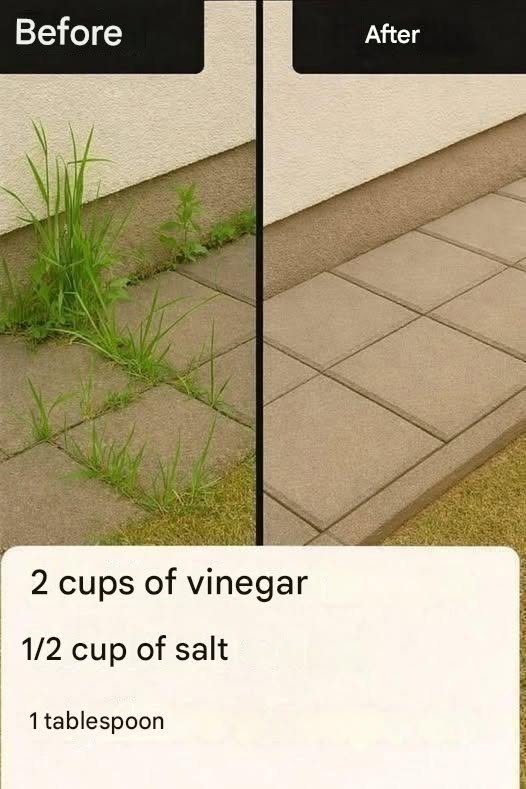
For small weeds growing in cracks in patios, driveways, or walkways, ordinary household vinegar can provide a simple option. But viral recipes containing vinegar + salt + dish soap aren’t a great all-purpose solution.
A simple option
Use:
- White vinegar (household vinegar is usually about 5% acetic acid)
- A spray bottle
Apply the vinegar directly to the leaves of young weeds on a warm, dry day. Vinegar works by damaging the foliage it contacts. It is non-selective, so it can also injure flowers, vegetables, grass, and other plants you spray.
⚠️ Don’t add salt if you want to protect your soil
Salt can kill vegetation, but repeated applications can build up in soil and damage desirable plants and soil quality. Extension specialists specifically advise against using salt as a routine weed-control ingredient.
What about stronger vinegar?
Horticultural vinegar containing 10–20%+ acetic acid can be substantially more effective than kitchen vinegar, but it’s also much more hazardous to skin and eyes. Products at these concentrations may carry a “Danger” warning, so they should be used only according to their pesticide label and with appropriate protective equipment.
🌱 The catch: it may not kill the roots
Vinegar is primarily a contact herbicide. It can quickly burn the leaves of small annual weeds, but established perennial weeds and grasses can regrow from their roots and may require repeated treatment or another control method.
For a truly low-chemical approach, pulling young weeds and then adding 2–4 inches of mulch is often a better long-term strategy for garden beds.