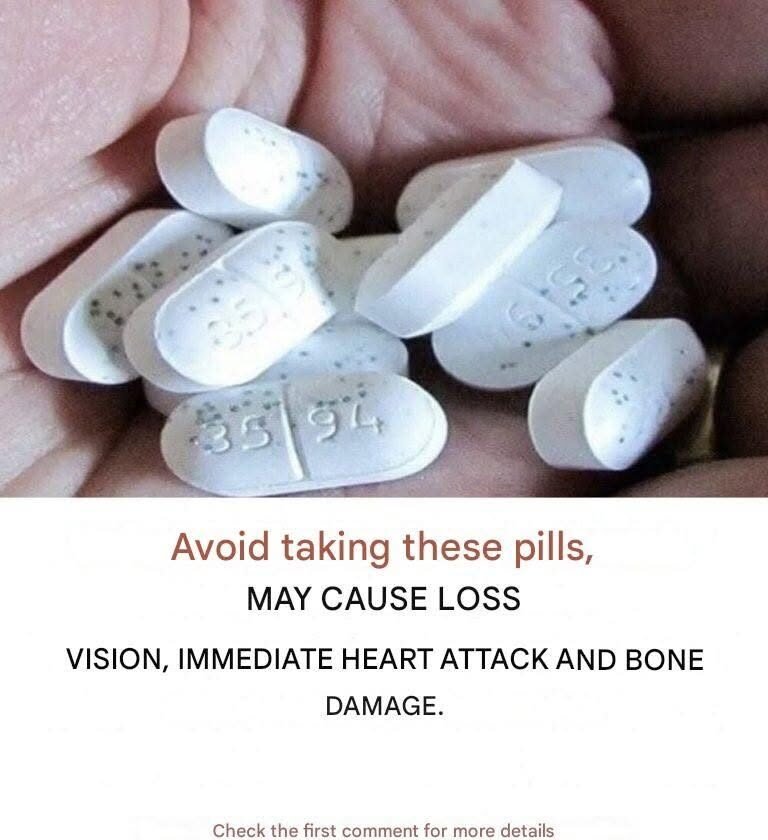
⚠️ “These Tablets Can Cause Blood Clots and Heart Attacks” — What’s the Truth?
This headline can be based on a real medication warning, but it is incomplete. Some medicines genuinely carry increased risks of blood clots, heart attack or stroke—but the risk depends heavily on the specific drug, dose, medical condition and individual risk factors.
One important example is the JAK-inhibitor class. The FDA requires prominent warnings for tofacitinib (Xeljanz), baricitinib (Olumiant), and upadacitinib (Rinvoq) because studies found increased risks of serious cardiovascular events, including heart attack and stroke, as well as blood clots and death in certain patients. (U.S. Food and Drug Administration)
💊 Who may be at higher risk?
For these medicines, the FDA specifically highlights people who:
- Are current or former smokers
- Have cardiovascular risk factors
- Have previously had a heart attack, stroke or blood clot
- Are older or have other significant medical conditions (U.S. Food and Drug Administration)
But don’t stop these medicines suddenly on your own. They may be controlling a serious inflammatory disease, and your doctor needs to weigh the benefits against the risks.
🚨 Know the warning signs
If someone taking a medicine with a blood-clot or cardiovascular warning develops new chest pressure, severe shortness of breath, sudden weakness, trouble speaking, or a swollen/painful leg, they should seek emergency medical attention. (U.S. Food and Drug Administration)
One important distinction
“Blood thrombots” is usually referring to blood clots (thrombosis). A blood clot can block blood flow and cause conditions such as deep-vein thrombosis, pulmonary embolism, heart attack or certain strokes.
Bottom line: Don’t believe a viral list telling everyone to stop particular tablets. The exact medication name matters. If you send me the tablets named in the article—or a screenshot of the list—I can check each one against current official safety information and explain which risks are real.