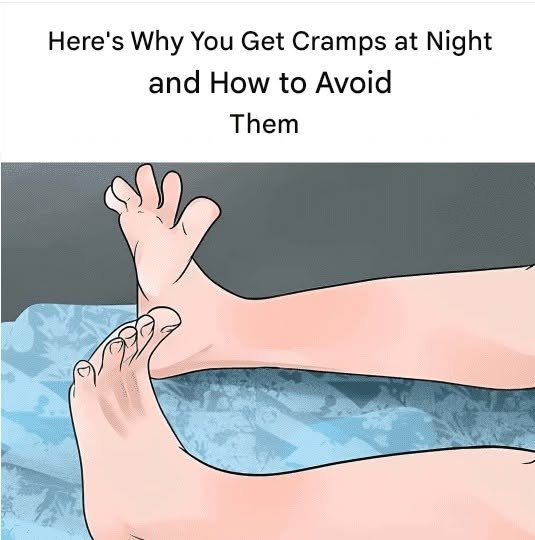
This Is Why We Get Cramps at Night
Nighttime leg cramps are sudden, involuntary muscle contractions, most often affecting the calves, feet or thighs. They’re especially common as we get older, and in many cases there isn’t one identifiable cause. (Mayo Clinic)
Why do they happen?
Possible contributors include:
- Muscle fatigue or overuse
- Long periods of sitting or inactivity
- Dehydration
- Certain medications, including some diuretics and blood-pressure medicines
- Nerve problems or diabetic neuropathy
- Kidney disease or circulation problems
- Changes in muscles, nerves and tendons associated with aging (Mayo Clinic)
Importantly, night cramps don’t automatically mean you’re deficient in magnesium, potassium or calcium. Taking supplements without knowing whether you’re deficient isn’t necessarily helpful.
🦵 What to do when a cramp strikes
- Straighten the leg.
- Pull your toes gently toward your face to stretch the calf.
- Massage the cramped muscle.
- If safe, stand up and put weight on the affected leg.
- Try warmth or a warm shower to relax the muscle. (Mayo Clinic News Network)
How to reduce future cramps
- Stay adequately hydrated.
- Gently stretch your calves before bed.
- Stay physically active during the day.
- Avoid prolonged periods of sitting.
- Review your medications with your doctor or pharmacist if cramps began after starting a new medicine. (Mayo Clinic)
Don’t routinely use quinine for leg cramps. Although it can reduce cramps, it can cause potentially serious adverse effects and isn’t routinely recommended. (Stormont Vail Health)
🚩 When cramps need medical attention
Make an appointment if cramps are frequent, severe, disrupting your sleep, or accompanied by muscle weakness, loss of muscle mass, numbness, swelling or persistent pain. (Mayo Clinic)
Bottom line: Nighttime cramps are common and usually harmless, but persistent cramps can sometimes point to a medication effect or an underlying medical problem. Stretching, regular movement and adequate hydration are reasonable first steps.