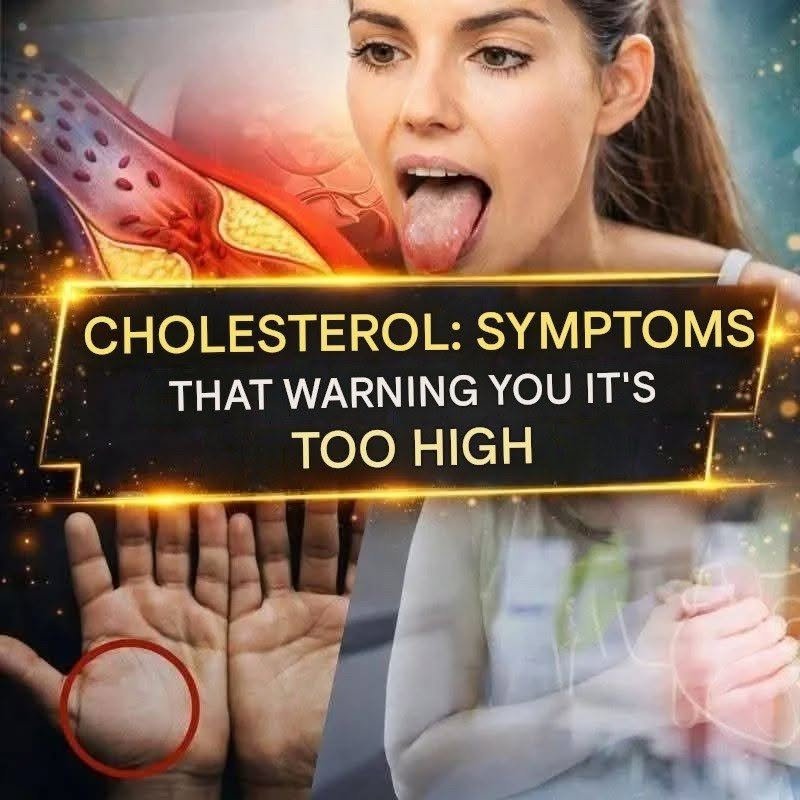
Cholesterol: 5 “Symptoms” That Warn It’s Too High
The important truth is that high cholesterol usually has no symptoms at all. You generally cannot tell from how you feel whether your LDL cholesterol is elevated—the only reliable way to know is a blood test. (CDC)
However, very high cholesterol, particularly inherited familial hypercholesterolemia (FH), can sometimes produce physical signs:
- Yellowish cholesterol deposits around the eyelids (xanthelasma).
- Firm yellowish bumps or lumps over tendons or joints (xanthomas).
- A gray-white ring around the cornea (corneal arcus), particularly when it appears at a young age.
- Chest pain or pressure can occur when cholesterol-related artery disease has developed—but this is a sign of cardiovascular disease, not high cholesterol itself.
- Heart attack or stroke symptoms can occur as a consequence of long-standing artery disease, but again, these are complications rather than symptoms of high cholesterol itself. (CDC)
🩸 Don’t wait for symptoms
A person can have substantially elevated LDL while feeling completely healthy. That’s why cholesterol screening is important, especially if you have diabetes, high blood pressure, a family history of early heart disease, or a close relative with familial hypercholesterolemia. (CDC Blogs)
If you develop sudden chest pressure, difficulty breathing, facial drooping, weakness on one side, or trouble speaking, seek emergency medical attention rather than assuming it’s “just cholesterol.”
Bottom line: The viral idea that there are five everyday symptoms that tell you your cholesterol is high is misleading. A lipid blood test—not symptoms—is the way to find out. (CDC)