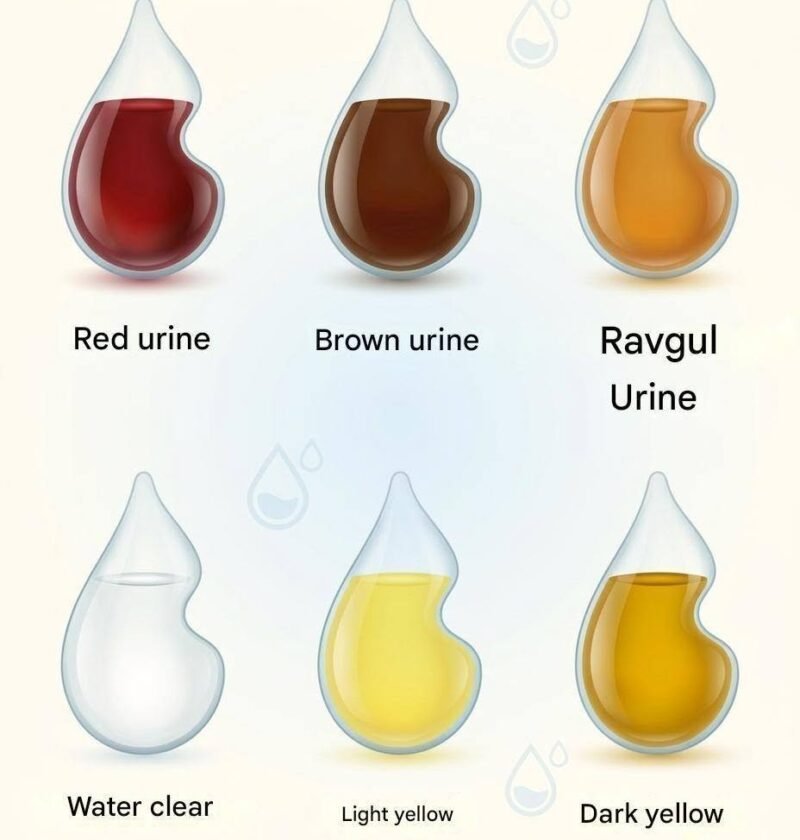
Yes—urine color can provide clues about hydration and sometimes health problems, but color alone cannot diagnose a disease. Normal urine generally ranges from clear to pale yellow, with darker yellow often indicating more concentrated urine.
💧 What different colors can mean
| Urine color | Possible meaning |
|---|---|
| Clear/colorless | Usually means you’re very well hydrated. Persistently drinking excessive amounts of water isn’t necessary and can sometimes be harmful. |
| Pale yellow | Generally a normal, well-hydrated color. |
| Dark yellow/amber | Often indicates concentrated urine and may suggest you need more fluids, particularly if you’re thirsty. |
| Pink/red | Could be blood, but beets, blackberries and some medications can also cause this color. Unexplained blood should be medically evaluated. |
| Orange | Can result from dehydration, vitamins or medications, but can sometimes indicate a liver or bile-duct problem, especially with yellow skin/eyes or unusually pale stools. |
| Brown/cola-colored | Can occur with severe dehydration, certain medications or foods, liver/kidney problems, or muscle injury after extreme exercise. |
| Cloudy/milky | Can be associated with a urinary tract infection or kidney stones, although there are other causes. |
| Green/blue | Uncommon. Food dyes, medications and certain medical conditions—including some UTIs—can cause it. |
🚨 When should you get checked?
Don’t ignore red/pink urine that isn’t clearly explained by something you ate, particularly if it persists. Blood in urine can come from infections, kidney stones and other conditions, including more serious problems.
Similarly, persistent dark-brown or orange urine, especially with yellowing of the eyes/skin, deserves medical evaluation.
And remember: a urinalysis can detect things that urine color cannot, including blood, protein, glucose, ketones and signs of infection or kidney problems.