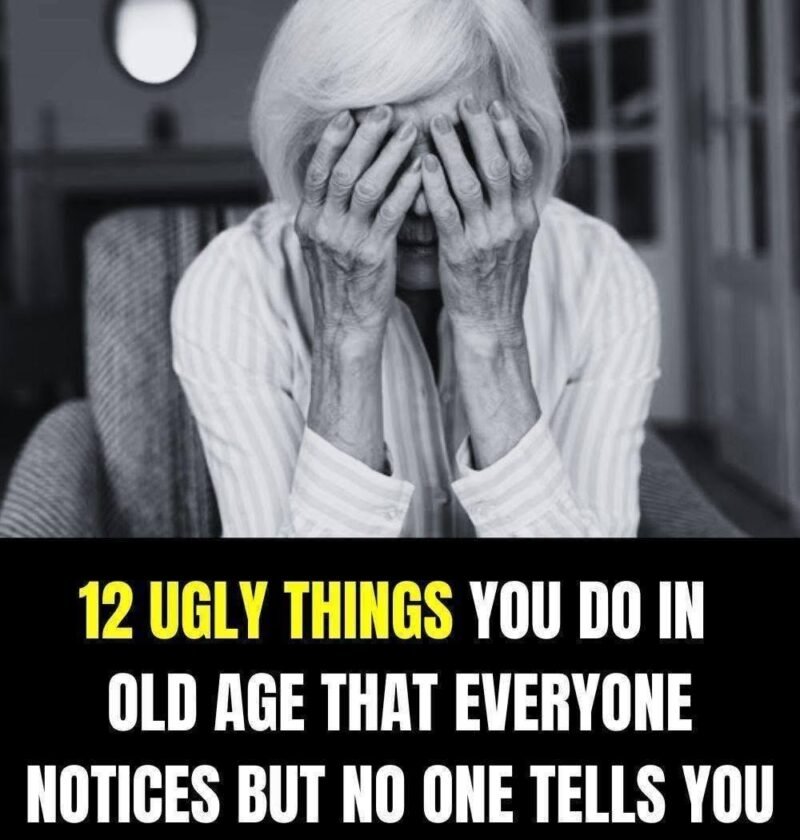
The headline “12 nasty things you do in old age that everyone notices, but no one dares to tell you” is unnecessarily harsh. Aging itself doesn’t make someone “nasty.” Some behaviors can become more noticeable with age, though, and many are fixable habits or signs of hearing, dental, sensory, or health problems.
12 things worth checking
- Ignoring body odor or clothing odors — reduced sense of smell can make it harder to notice your own odors. Smell can naturally decline with age.
- Neglecting dental care — persistent bad breath, dirty dentures, or untreated gum problems can affect other people’s interactions with you. Regular brushing, cleaning between teeth, and dental visits remain important.
- Wearing visibly soiled clothes repeatedly — a simple laundry routine can make a big difference.
- Not washing or grooming regularly — difficulty bathing or dressing can sometimes reflect reduced mobility rather than laziness. If basic self-care becomes difficult, getting assistance is sensible.
- Repeatedly interrupting conversations — sometimes this happens because you’re not hearing the other person properly.
- Pretending you can hear when you can’t — repeatedly saying “what?” or responding incorrectly can frustrate conversations. Hearing loss is common in older adults and is treatable in many cases.
- Turning the television volume extremely high — this can be another clue that hearing should be checked.
- Constantly complaining without allowing others to speak — sharing problems is normal, but conversations work better when they’re reciprocal.
- Giving unsolicited advice about everyone’s life — experience is valuable, but people are more receptive when advice is requested.
- Refusing all social activities — preferring solitude is perfectly fine, but withdrawing completely can increase social isolation. Meaningful hobbies and connections can support healthy aging.
- Ignoring changes in appearance or mobility — suddenly becoming unsteady, struggling to walk, or having difficulty with everyday tasks isn’t simply “being old” and deserves attention.
- Refusing help when help is genuinely needed — accepting assistance can actually preserve independence rather than diminish it.
The kinder lesson
The goal shouldn’t be to worry about what “everyone notices.” Instead, occasionally ask yourself: “Is there anything I could improve that would make daily life more comfortable for me and the people around me?”