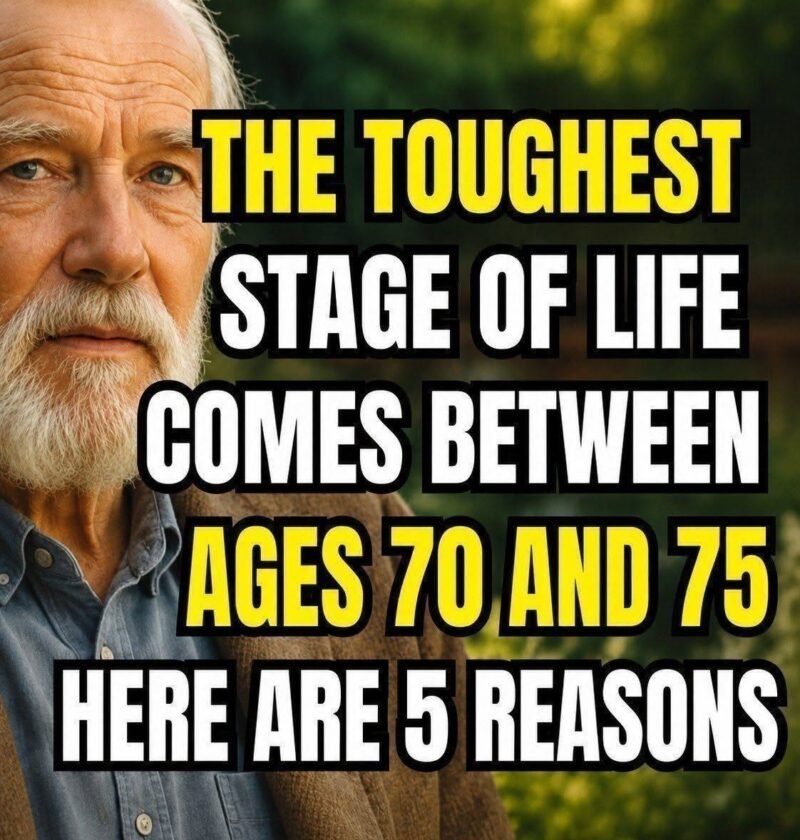
Is 70–75 Really the “Hardest Time of Life”? Here Are 5 Challenges to Watch
The claim that ages 70–75 are universally the hardest years of life isn’t supported by medical evidence. People age very differently, and many enjoy excellent health, independence, and meaningful activities well beyond 75. WHO emphasizes that healthy aging depends greatly on health, environment, social connections, and individual circumstances—not simply a person’s age. (World Health Organization)
That said, the 70s can bring some challenges worth preparing for:
1. 🦵 Changes in strength and balance
Muscle loss, changes in gait, vision, and balance can increase fall risk. Staying physically active and addressing balance problems can help maintain independence. (National Institute on Aging)
2. ❤️ More chronic health conditions
Conditions such as heart disease, diabetes, osteoarthritis, hearing loss, and vision problems become more common with advancing age. Regular checkups can help identify problems early. (World Health Organization)
3. 🧠 Changes in memory and thinking
Some slowing of processing can occur with normal aging, but significant or progressive memory problems aren’t something to simply dismiss as “getting old.” Cognitive health can be supported by physical activity, social engagement, and management of health conditions. (National Institute on Aging)
4. 🤝 Loneliness and loss of social connections
Retirement, losing friends or a spouse, mobility limitations, and living alone can reduce social contact. Loneliness and social isolation are associated with poorer physical and mental health. (World Health Organization)
5. 🏠 Maintaining independence
Mobility difficulties can make everyday tasks, transportation, shopping, and managing a home more challenging. Small changes—such as improving home safety, maintaining strength, and arranging transportation or support when needed—can make a major difference. (National Institute on Aging)
🌱 The positive side
Being 70–75 doesn’t mean life has to become difficult. Maintaining movement, staying socially connected, getting regular medical care, eating well, protecting sleep, and continuing activities that provide purpose can all support healthy aging.
Bottom line: Don’t let a headline convince you that 70–75 is automatically the “hardest” period of life. The goal isn’t to fight aging—it’s to preserve strength, independence, connection, and purpose as you age.