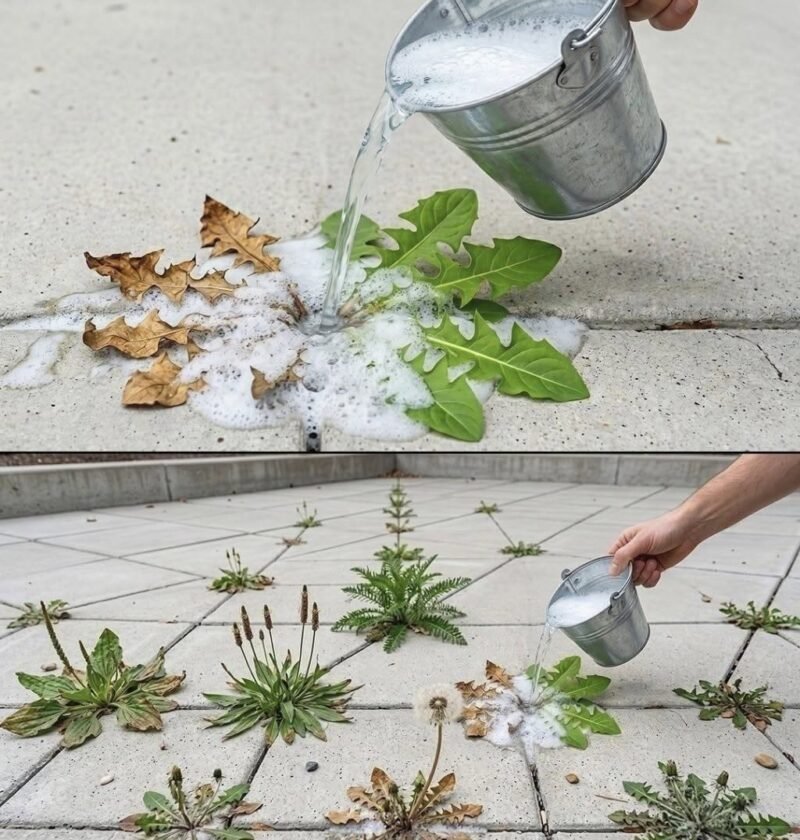
If you’re looking for the details behind this headline, homemade weed killers can work in limited situations, but many viral recipes are misleading. In particular, salt, vinegar, dish detergent, and bleach mixtures can damage desirable plants, soil, or nearby vegetation, and Penn State Extension specifically advises against homemade weed-killer mixtures.
🌿 Safer natural approaches to weed control
- Pull or dig young weeds — Removing weeds before they flower and produce seeds helps prevent future infestations.
- Mulch bare soil — A suitable layer of organic mulch can suppress new weed seedlings while conserving moisture.
- Use boiling water carefully — It can kill vegetation it contacts, making it useful for isolated weeds in cracks and other areas where desirable plants won’t be affected.
- Try commercial organic herbicides — Products based on ingredients such as acetic acid, citric acid, clove oil, or other plant-derived compounds are available. They are generally contact herbicides, so they may burn foliage without killing the roots of established perennial weeds.
- Prevent seed production — Removing weeds before they mature and spread seeds is one of the simplest long-term strategies.
- Use landscape fabric or other physical barriers where appropriate to prevent weeds from emerging.
⚠️ What about the famous vinegar + salt recipe?
It’s not a magic permanent weed killer. Household vinegar can burn very young weeds, but it generally doesn’t kill established perennial roots. Salt can persist in soil and harm desirable plants, soil organisms, and surrounding vegetation.