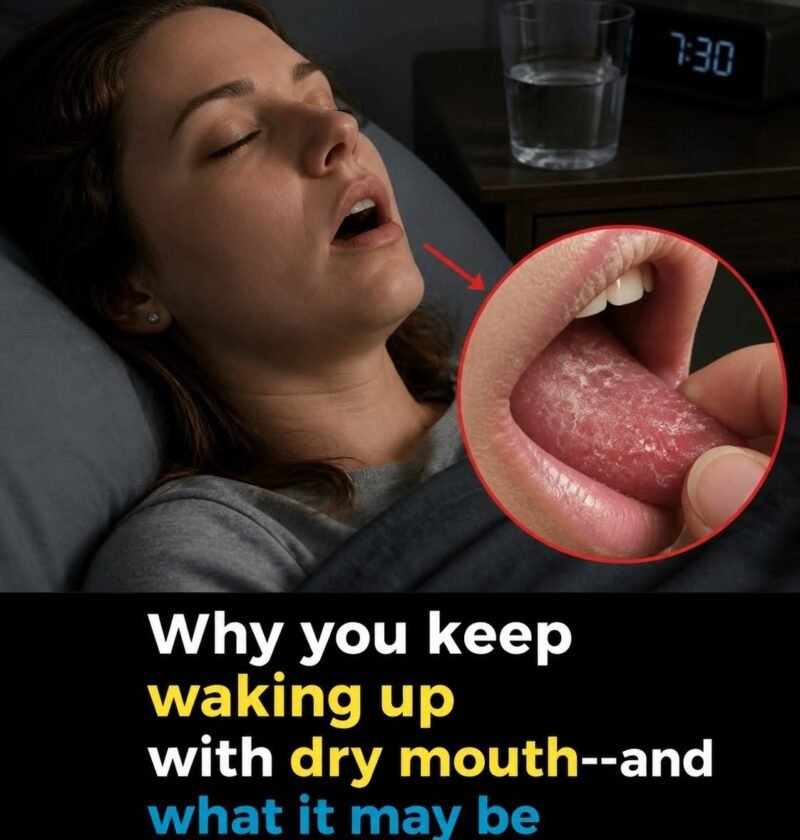
Waking up with a dry mouth is common and usually isn’t a sign that something is seriously wrong. But if it happens regularly, it can sometimes point to an underlying issue worth checking. (nhs.uk)
What your body might be telling you
- You may be dehydrated 💧
Not drinking enough fluids, sweating, illness, or alcohol can contribute to dehydration and dry mouth. - You may be sleeping with your mouth open
A blocked nose, allergies, snoring, or simply breathing through your mouth overnight can dry out the mouth considerably. (nhs.uk) - Your medication could be responsible 💊
Hundreds of medications can cause dry mouth, including some medicines for depression, blood pressure, anxiety, allergies, pain, and congestion. Don’t stop a prescribed medicine without medical advice. (Mayo Clinic) - It could be associated with sleep apnea 😴
Waking with a dry mouth is one possible symptom of sleep apnea, particularly when accompanied by loud snoring, gasping/choking during sleep, morning headaches, or significant daytime sleepiness. (Mayo Clinic) - Persistent dryness can sometimes accompany medical conditions
Diabetes and Sjögren syndrome are among conditions associated with ongoing dry mouth. If you also have frequent urination, unusual thirst, or persistently dry eyes, it’s worth discussing with a healthcare professional. (nhs.uk)
What you can try tonight
Keep water beside your bed, drink regularly during the day, use sugar-free gum or lozenges to stimulate saliva, avoid excessive alcohol and caffeine, and consider a humidifier if the bedroom air is dry. Good brushing and fluoride toothpaste are particularly important because persistent dry mouth increases the risk of tooth decay and gum problems. (Mayo Clinic)
Don’t ignore persistent symptoms. See a doctor or dentist if the dryness continues for several weeks, makes eating or speaking difficult, causes mouth pain/bleeding or white patches, or occurs alongside symptoms such as excessive thirst/urination or dry eyes. (nhs.uk)