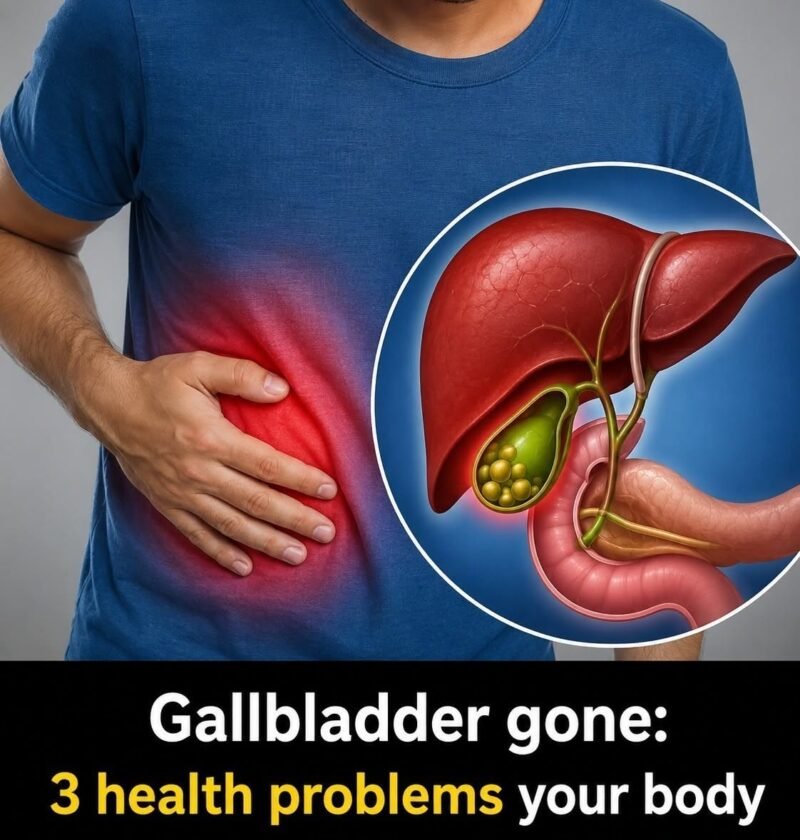
The headline “What Happens to the Body After Gallbladder Removal? 3 Diseases That May Follow – Avoid Surgery If Possible” is misleading. Gallbladder removal (cholecystectomy) is a common operation, and most people can live normally without a gallbladder. The gallbladder stores bile; after removal, the liver continues producing bile, which flows directly into the small intestine. (NIDDK)
What can happen after surgery?
Some people experience temporary:
- Diarrhea or softer, more frequent stools
- Bloating or indigestion
- Nausea
- Abdominal discomfort, particularly after fatty meals
These symptoms often improve as the digestive system adjusts. A smaller proportion of people have persistent diarrhea, which can sometimes be related to excess bile acids reaching the colon and can be treated medically. (Mayo Clinic)
Are there “3 diseases” caused by removal?
There isn’t a standard medical list of three diseases that everyone develops after gallbladder removal. Rare or less-common complications can include bile-duct injury, bile leakage, retained bile-duct stones, pancreatitis, or persistent digestive symptoms, but these are complications—not inevitable diseases caused by losing the gallbladder. (ACS)
Should you avoid surgery?
Not simply because of this headline. If you have symptomatic gallstones, recurrent gallbladder attacks, inflammation, or certain other gallbladder problems, surgery is often the standard treatment. Leaving problematic gallstones untreated can lead to serious complications, including gallbladder infection, bile-duct infection, or pancreatitis. (NIDDK)
On the other hand, silent gallstones that cause no symptoms often don’t require treatment. (NIDDK)
Bottom line: Gallbladder removal does change how bile is stored and delivered, but it does not mean you’re destined to develop three diseases. Whether surgery is appropriate depends on why it has been recommended and your individual circumstances.
If you’re considering gallbladder surgery, I can also explain the 5 main risks of the operation, what recovery is like, and what you can eat afterward.