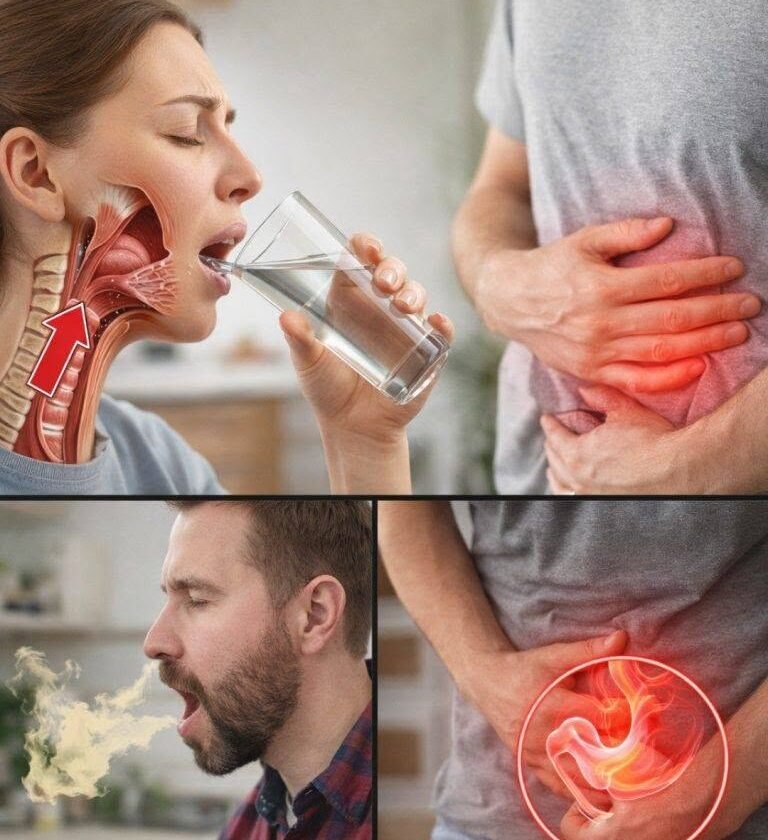
10 Common Symptoms of a Hiatal Hernia
-
Heartburn: A burning sensation behind the breastbone, often worse after eating, bending over, or lying flat.
-
Acid regurgitation: Sour or bitter-tasting stomach acid or partially digested food backing up into the throat or mouth.
-
Difficulty swallowing (): Feeling like food slows down or gets caught on the way to the stomach.
-
Chest or upper abdominal pain: Dull pressure, aching, or burning discomfort just below the ribs or behind the sternum.
-
Feeling full quickly (): Bloating or tightness after modest meals.
-
Frequent belching or hiccups: Trapped air in the upper stomach pouch causing repeated burping or diaphragm irritation.
-
Nausea or vomiting: Queasiness after meals or when lying down.
-
Chronic cough or throat clearing: Acid mist irritating the airways and vocal cords, especially at night or upon waking.
-
Hoarseness or sore throat: Persistent voice rasping or morning throat irritation without a cold.
-
Shortness of breath: Larger hernias can press upward against the diaphragm or lungs, causing mild breathlessness after meals.