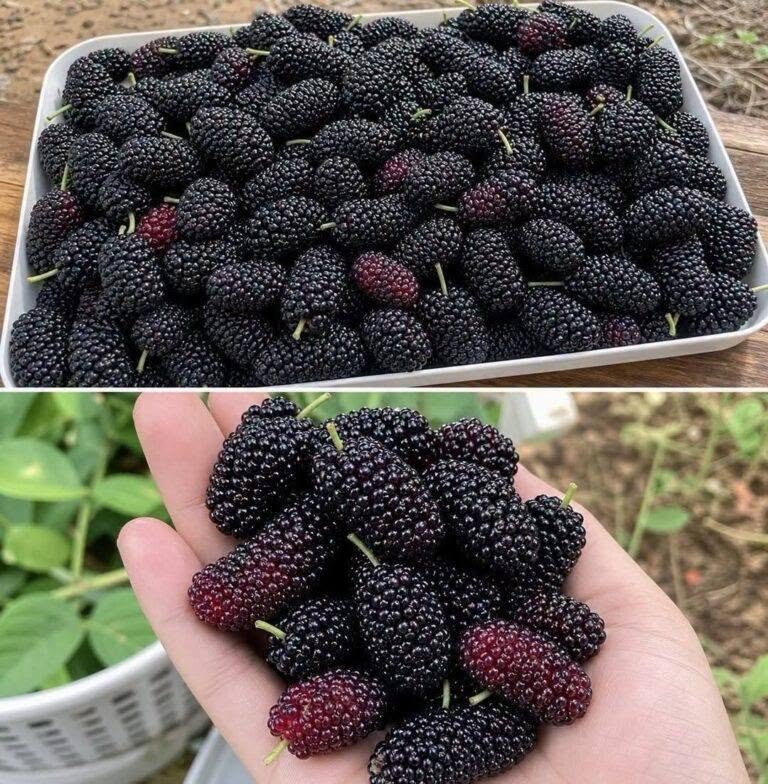
How to Tell Them Apart
-
Blackberries: Grow on thorny shrubs, hold a solid white core inside when picked, and taste tart-sweet with noticeable seeds.
-
Black Mulberries: Grow on deciduous trees (common across South Asia, the Middle East, and the Mediterranean, where they are known as shahtoot or kala toot), have a tiny green stem attached instead of a thick core, and taste intensely sweet with low acidity.
-
Blackcurrants: Smooth, round, glossy berries growing in hanging clusters rather than bumpy aggregate drupelets.
Key Nutritional & Health Benefits
-
Rich in Anthocyanins: Their deep purple-black pigment comes from , which help neutralize free radicals and reduce low-grade inflammation.
-
Blood Sugar Support: Mulberries contain 1-deoxynojirimycin (DNJ), a natural compound that slows carbohydrate breakdown in the gut and helps blunt post-meal blood sugar spikes.
-
Heart & Circulation Health: High levels of polyphenols, potassium, and dietary fiber support healthy blood pressure and help lower LDL cholesterol oxidation.
-
Iron & Vitamin C Combo: Unlike most berries, black mulberries provide a meaningful dose of non-heme iron paired with vitamin C, which improves iron absorption and supports red blood cell production.