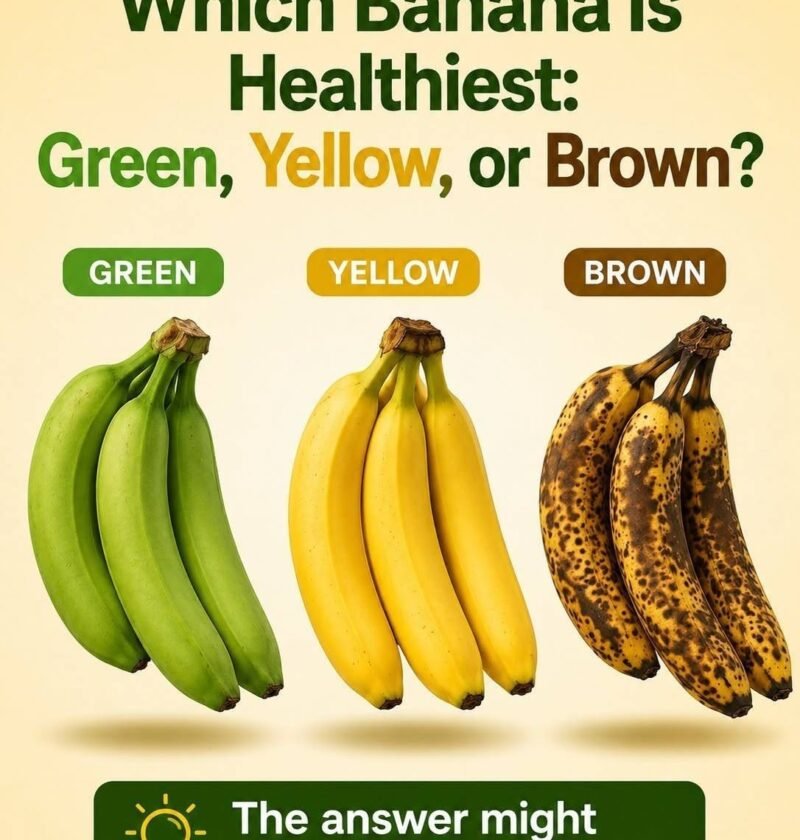
Headlines asking “Which Banana Is Actually the Healthiest” imply one ripeness stage is nutritionally superior and the others should be avoided. In reality, every stage of ripeness has the same core vitamins and minerals (potassium, vitamin B6, vitamin C, and magnesium), but the type of carbohydrate shifts dramatically as a banana ripens—making different stages healthier depending on your specific goal.
How Ripeness Changes What Happens in Your Body
| Ripeness Stage | Carb & Fiber Profile | Best For | Drawbacks |
| 1. Green / Underripe | Up to 70%–80% resistant starch (acts like soluble fiber); very low free sugar; firm, chalky texture. | Blood sugar control, gut microbiome feeding, and longer fullness—digests slowly with a low glycemic impact. | Harder to digest; can cause gas or bloating in people with sensitive digestion or IBS. |
| 2. Firm Yellow (Just Ripe) | Balanced mix of remaining resistant starch, fiber (~3 g), and natural sugars; creamy, mild sweetness. | Best everyday all-rounder—easy to digest while still avoiding a rapid blood sugar spike. | Slightly lower antioxidant levels than fully spotted bananas. |
| 3. Ripe Yellow With Brown Spots | Starch has broken down into simple sugars (sucrose, glucose, fructose); higher antioxidant levels as chlorophyll breaks down. | Quick pre- or post-workout energy, easy digestion, and soothing a sensitive stomach. | Raises blood sugar faster if eaten alone on an empty stomach. |
| 4. Very Brown / Overripe | Almost entirely simple sugars; soft, sweet, and rich in phenolic antioxidants; lowest fiber-to-sugar ratio. | Natural baking sweetener (banana bread, oatmeal, pancakes) to replace refined table sugar. | Fastest glycemic rise if eaten plain in large amounts. |
The Verdict: Which One Should You Pick?
-
For Blood Sugar Stability & Gut Health: Choose slightly green or barely yellow bananas (and pair with nuts, seeds, or Greek yogurt to slow digestion even further).
-
For Daily Snacking & Balanced Nutrition: Choose firm, bright-yellow bananas—you get smooth digestion without excess simple sugars.
-
For Exercise Fuel or Sensitive Stomachs: Choose yellow bananas with light brown speckles, which break down quickly into usable energy.
-
What About Red Bananas or Plantains? Red bananas offer nearly identical nutrition to yellow Cavendish bananas with slightly higher beta-carotene and vitamin C, while starchy cooking plantains behave closer to potatoes (richer in complex starch and vitamin A when cooked).