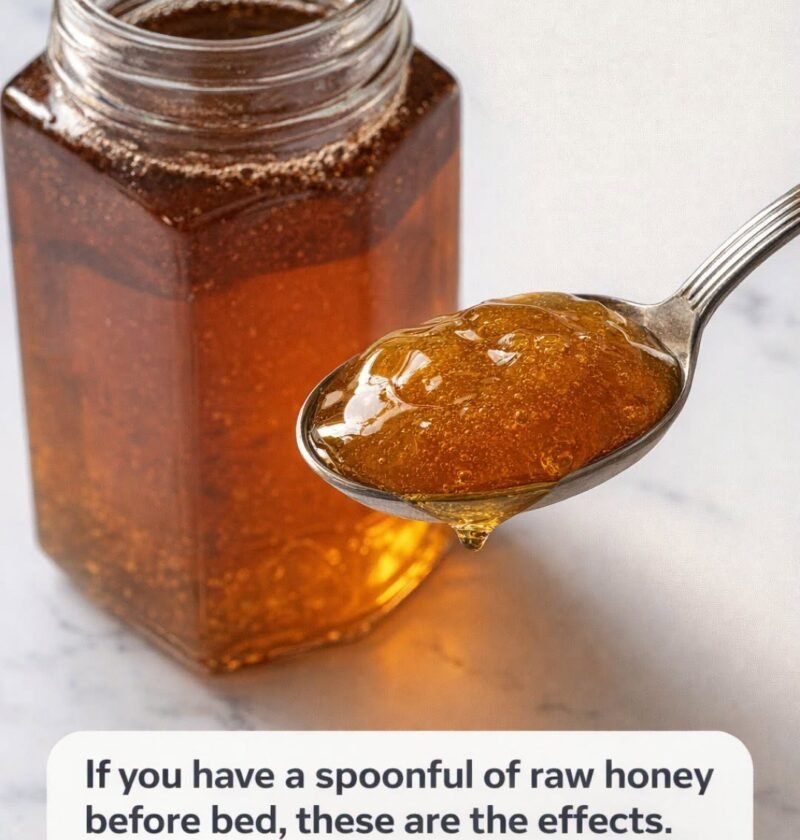
What Actually Happens vs. Viral “20 Effects” Exaggerations
| Claim in Viral Honey Lists | Actual Evidence & Physiology |
| Soothes Nighttime Cough & Throat Irritation | Supported (in adults & children ≥1 year): Honey’s thick texture coats irritated throat mucosa and triggers gentle salivation, which clinical trials show can reduce nighttime cough frequency and help children/adults sleep slightly better during mild upper respiratory infections. |
| “Boosts Melatonin & Guarantees Deep Sleep” | Overstated: Honey contains tiny trace nutrients and a small carbohydrate load, which can feel comforting in warm water or herbal tea, but it is not a clinically proven sleep aid or insomnia cure. |
| “Fuels Liver Glycogen to Burn Fat While You Sleep” | Clickbait myth: A spoonful of honey adds ~20–60 calories of sugar. It provides a tiny amount of glucose, not a metabolic “fat-burning hack.” |
| “Kills Infections / Detoxifies the Body” | Misleading: Raw honey has mild topical antibacterial properties on wounds (especially medical-grade Manuka honey), but swallowing a spoonful does not cure internal infections or “detox” organs—your liver and kidneys handle detoxification. |
| Raises Overnight Blood Sugar & Tooth-Decay Risk | Real trade-off: Because honey is ~80% free sugars, taking it right before bed—especially after brushing your teeth—feeds cavity-causing mouth bacteria overnight and can spike blood glucose in people with diabetes or prediabetes. |
Important Safety Rules Around Raw Honey
-
Strictly Never Give Honey to Infants Under 12 Months: Raw or pasteurized honey can contain Clostridium botulinum spores, which can cause infant botulism—a rare but life-threatening paralytic illness in babies under 1 year old.
-
Protect Teeth & Watch Blood Sugar: If you use honey to soothe a nighttime cough, rinse your mouth with water or brush your teeth afterward, keep portions small (1–2 teaspoons), and factor the carbohydrates in if you have diabetes, insulin resistance, or reactive hypoglycemia.
-
Allergy Caution: People with severe pollen or bee-product allergies can occasionally react to raw, unfiltered honey.
When to Seek Care
-
Emergency Care (
<1 hour): Call 1122 (in Pakistan) or go to the nearest emergency hospital immediately if a cough or throat symptom comes with trouble breathing, noisy breathing/stridor, lip/tongue/throat swelling, chest pain, coughing up blood, or high fever with confusion. -
Routine Doctor Visit (Within 2–7 Days): Schedule a checkup if a cough lasts more than 2–3 weeks, wakes you repeatedly despite basic soothing measures, or if you have chronic insomnia, loud snoring/gasping, or elevated blood sugar.