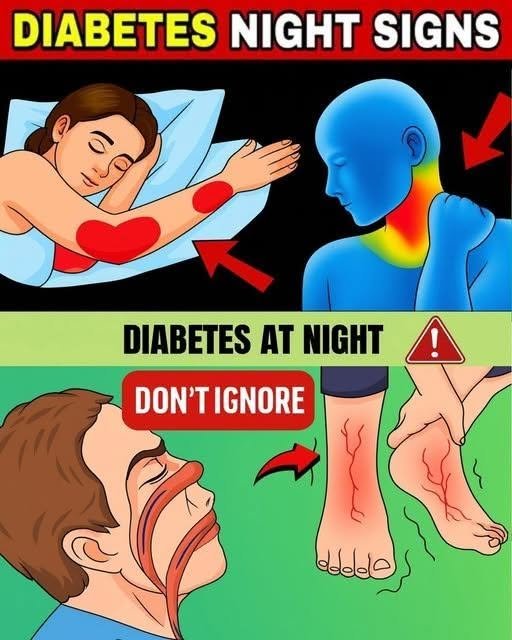
7 Nighttime Signs Often Linked to Blood Sugar Issues
-
Frequent Urination at Night (Nocturia): When blood glucose stays high, kidneys pull excess water from the body to flush sugar into urine, waking you up repeatedly.
-
Excessive Thirst or Dry Mouth: Fluid loss from frequent urination and mild dehydration leaves your mouth parched and drives intense thirst overnight.
-
Waking Up Exhausted or Groggy: Wide blood sugar swings or overnight drops—especially in people taking insulin or —disrupt restorative sleep.
-
Night Sweats or Shakiness: A nighttime dip in blood sugar can trigger a stress-hormone surge that causes sweating, trembling, anxiety, or a racing heart.
-
Foot Tingling, Burning, or Cramps: Elevated blood sugar over time irritates small peripheral nerves and alters electrolyte balance, making feet or calves tingle, ache, or cramp in bed.
-
Late-Night Hunger or Sugar Cravings: Rapid blood sugar spikes followed by steep drops can leave you feeling hungry or craving sweets late in the evening.
-
Restless Legs or Uncomfortable Feet: Nighttime leg discomfort and inability to stay still often overlap with nerve irritation, , or poor circulation.
8 Practical Ways to Bloat-Proof Carbs Without Cutting Them Out
-
Eat Fiber and Protein Before Carbs: Start meals with non-starchy vegetables (like salad, okra, spinach, or beans) and protein (like lentils, eggs, fish, or chicken) before eating rice or bread to slow gastric emptying.
-
Pair Carbs With Healthy Fat and Protein: Combine carbohydrates with nuts, seeds, yogurt, olive oil, or legumes rather than eating refined carbs solo.
-
Swap Refined Grains for Higher-Fiber Staples: Choose brown or basmati rice, whole-grain roti, oats, or barley over white bread, pastries, or polished white rice to increase fiber and lower the .
-
Cool and Reheat Starches (“Resistant Starch”): Cooking and cooling foods like rice or potatoes increases resistant starch, which digests more slowly and produces a smaller glucose rise than piping-hot freshly cooked starch.
-
Keep Portions Measured: Even healthy carbs spike blood sugar if the serving is huge. Use a simple visual guide—such as one cupped handful or about one-third to one-half of your plate.
-
Cut Liquid Sugars First: Sugary tea, sweetened drinks, fruit juices, and sodas spike blood glucose rapidly without filling you up. Swapping them for water, unsweetened tea, or black coffee is often the easiest win.
-
Take a 10–15 Minute Walk After Meals: Light walking right after eating helps muscles pull glucose from the bloodstream without needing extra insulin.
-
Avoid Heavy Carbs Right Before Bed: Finishing large, carb-heavy meals close to bedtime leaves glucose elevated while movement and insulin sensitivity are lower overnight.