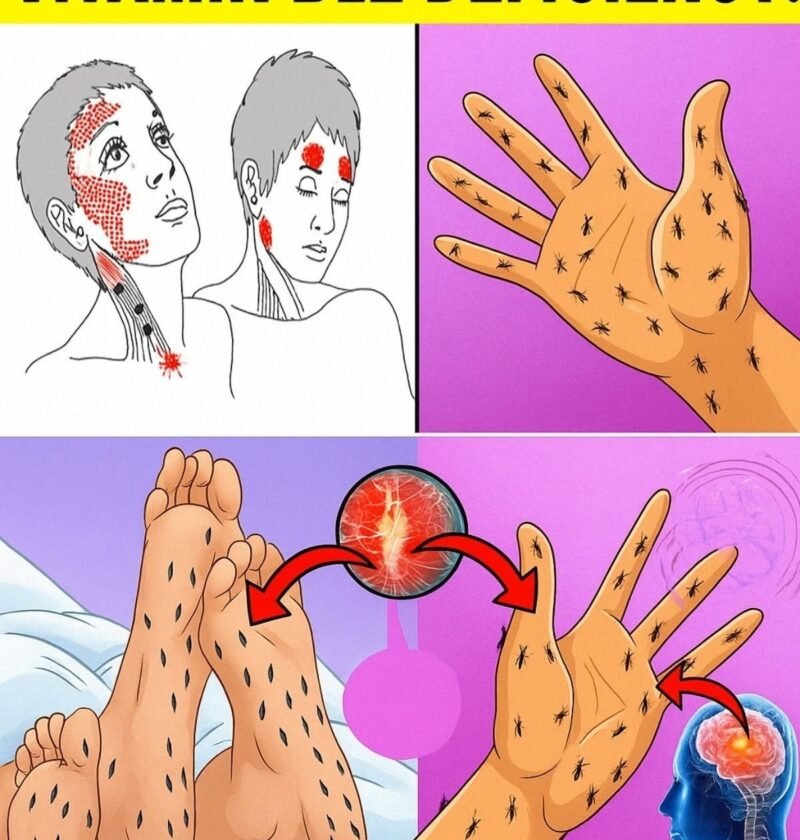
Vitamin B12 Deficiency Symptoms That Shouldn’t Be Ignored
Vitamin B12 deficiency can develop gradually, and some symptoms may initially seem unrelated. Importantly, nerve problems can occur even without anemia, and prolonged deficiency can sometimes cause permanent neurological damage.
🚩 Common warning signs
- Persistent tiredness or weakness
- Numbness or tingling in the hands or feet
- Poor balance or difficulty walking
- Muscle weakness
- Memory or concentration problems
- Confusion or changes in thinking
- Mood changes, including depression or anxiety
- Pale skin
- A sore, smooth or red tongue
- Mouth ulcers
- Loss of appetite or unexplained weight loss
- Heart palpitations
- Vision problems
- Shortness of breath, particularly when anemia develops.
⚠️ The symptoms I would take particularly seriously
New numbness/tingling, balance problems, weakness, memory changes or vision problems deserve medical assessment rather than simply taking a vitamin supplement and hoping they disappear. Neurological effects of B12 deficiency can sometimes become irreversible if treatment is delayed.
🧪 How is B12 deficiency confirmed?
Symptoms alone aren’t enough. A clinician can order a blood test for B12, often alongside a blood count and folate testing. If the B12 result is borderline, methylmalonic acid (MMA) can help clarify whether a deficiency is present.
Who is more likely to become deficient?
Risk is higher in people who:
- Eat little or no animal-derived food without reliable B12-fortified foods/supplements
- Have problems absorbing B12
- Have had certain stomach or intestinal surgeries
- Have pernicious anemia
- Take metformin or proton-pump inhibitors for prolonged periods.